
The traditional commercial real estate play-book is undergoing a significant re-pricing. For decades, institutional investors and corporate tenants relied heavily on a rigid grading system. If an office tower carried a Premium or A-Grade badge, it was considered a guaranteed performer.
However, recent global data shows a major structural shift. A wide twenty-percentage-point valuation gap has emerged between the top and bottom tiers of premium towers. This trend is playing out acutely right here in the Brisbane central business district (CBD) and its near-city fringes.
The commercial market is bifurcating rapidly. Success is no longer determined by an official label. Instead, it relies on prime location and the physical ability of an individual asset to adapt to modern workplace demands.
The Academic Foundation: Flight to Quality
This market behaviour aligns with long-standing economic research. An influential study on changing price spreads investigated how economic downturns impact pricing and turnover in office markets. The full analysis in the paper is available at "Flight to Quality? An Investigation of Changing Price Spreads in Commercial Real Estate Markets".
The main findings are:
- Widening Price Spreads: The price gap between top-tier properties (Class A) and lower-tier properties (Class B or C) grows significantly during downturns.
- The Flight to Quality: During economic turmoil, investors regularly shift away from higher-risk assets to safer, premium assets.
- Variable Attribute Pricing: Property characteristics such as size, height, and age are valued differently depending on whether the economy is rising or falling.
- Impact on Turnover: Downturns cause significant variations in transaction turnover across quality tiers, largely driven by illiquidity among lower-tier buildings during recessions.
The Brisbane Context: A Tale of Two Markets
Brisbane serves as a textbook example of this real estate divide. According to recent Property Council of Australia (PCA) and commercial research data, the Brisbane CBD headline vacancy rate has hovered between 9.8 percent and 11.8 percent . However, looking at the headline figure alone hides a much more dramatic story of divergence between asset classes.
While secondary and B-Grade assets face deep structural vacancy challenges, tenant interest remains heavily concentrated in prime assets. The delivery of major new premium spaces, such as 360 Queen Street and 205 North Quay, briefly bumped headline vacancy numbers up as new supply entered the market. Yet, these premium spaces benefit from incredibly high pre-commitment levels, proving that occupiers are waiting in line for top-tier environments.
Conversely, the near-city and fringe markets tell a completely different story. Vacancy rates in those peripheral, unrefurbished areas are lagging far behind, hovering around fifteen percent. Corporate tenants are hyper-focused on location. In a bid to encourage workers back into physical offices, businesses are prioritising central, highly accessible locations. Proximity to major transit networks, retail hubs, and upcoming infrastructure updates like the Cross River Rail nodes provides an immediate competitive advantage, directly improving employee commuting and staff retention.
(Niche Advisory Brisbane)
Widening Rental Premiums and Scarcity
Brisbane's prime market is exceptionally tight because it features a lower proportion of prime stock (around 59.8 percent) compared to Sydney and Melbourne. This local scarcity, combined with specific regional tailwinds, has accelerated the shift toward premium spaces. Just as the academic research highlights that top-tier assets maintain immense pricing power during structural shifts, Brisbane's rental spread has expanded dramatically:
- Premium and A-Grade Surge: Net effective rents for Premium-grade assets in Brisbane have seen an immense upward trajectory. Annual growth has exceeded 13.8 percent for top-tier properties, with A-Grade spaces recording even steeper year-on-year increases.
- Secondary Market Lag: Secondary assets are lagging far behind in rent growth. Owners of rigid, un-refurbished buildings are being forced to offer massive tenant incentives, frequently pushing close to fifty percent, just to secure occupiers and maintain baseline occupancy.
The medium-term macro outlook remains highly confident. Sustained demand from professional services, major government tenant expansions, and the long-term infrastructure runway leading up to the Brisbane 2032 Olympics are keeping a firm floor under prime office demand.
Beyond the Label: Adaptability and Local Benchmarks
To put this into geographical context on the market map, specific assets demonstrate exactly where capital is flowing. 1 William Street remains a benchmark for major institutional and government occupancy on the riverfront. Meanwhile, assets like 144 Edward Street and major financial hub locations like Corporate House (1 Eagle Street) demonstrate how premium positioning and turnkey, high-amenity fitouts are being successfully utilised to draw teams back to the CBD.
A revealing metric from recent leasing tracking highlights this shift. Out of 136 major corporate tenant relocations in the Brisbane market, only 17 organisations chose secondary assets. The remaining vast majority moved into prime, amenity-rich spaces.
Anatomy of the Ideal Asset
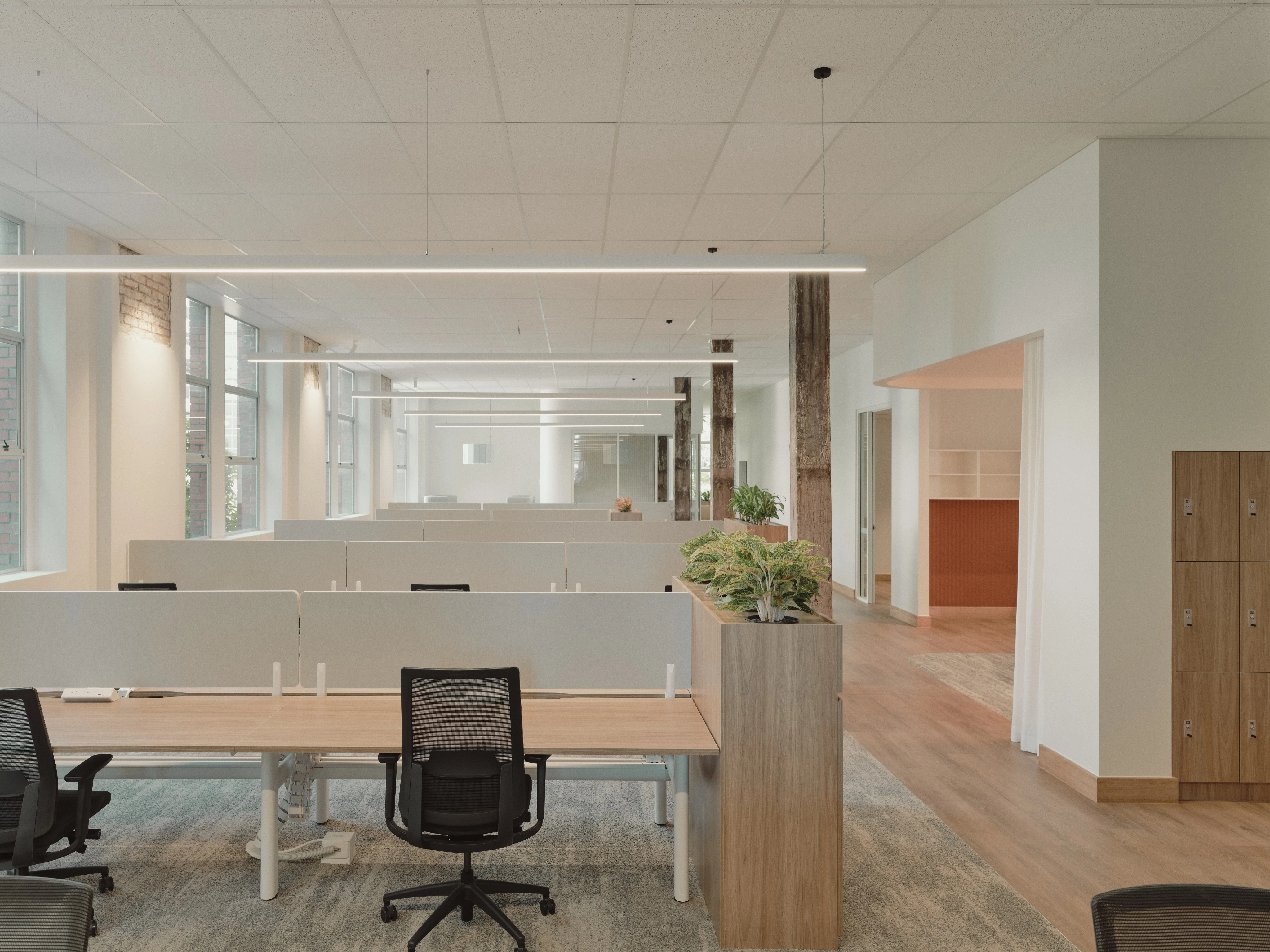 Source: Client provided 93 Edward Street
To secure premium rental rates and avoid prolonged vacancy, a commercial building can no longer function as a static grid of desks. It must be viewed as a flexible, tech-enabled ecosystem designed around hospitality, collaboration, and environmental wellness. The most successful assets in the current Brisbane market incorporate several non-negotiable physical traits:
- The Hospitality-Driven Ground Floor: The traditional corporate lobby has been replaced by a hotel-lounge experience. These spaces feature high-end café operators, informal breakout lounges, and flexible meeting spaces that remove the clinical feel of a standard entrance.
- Activity-Based Tenancy Layouts: Modern layouts are optimised for zoning rather than fixed, open-plan seating. Floorplates must offer a mix of large, modular collaboration hubs with movable walls alongside soundproof, acoustic pods designed for virtual video calls.
- Strict Environmental and Structural Credentials (ESG): High National Australian Built Environment Rating System (NABERS) and Green Star ratings are mandatory for institutional and government tenants. This includes smart, sensor-driven HVAC systems that optimise indoor air quality and natural light.
- Hotel-Grade End-of-Trip (EOT) Facilities: To cater to active commuters, basements are being transformed into luxury wellness hubs. These spaces feature secure bicycle and e-scooter storage, rainfall showers, complimentary towel services, and premium styling amenities.
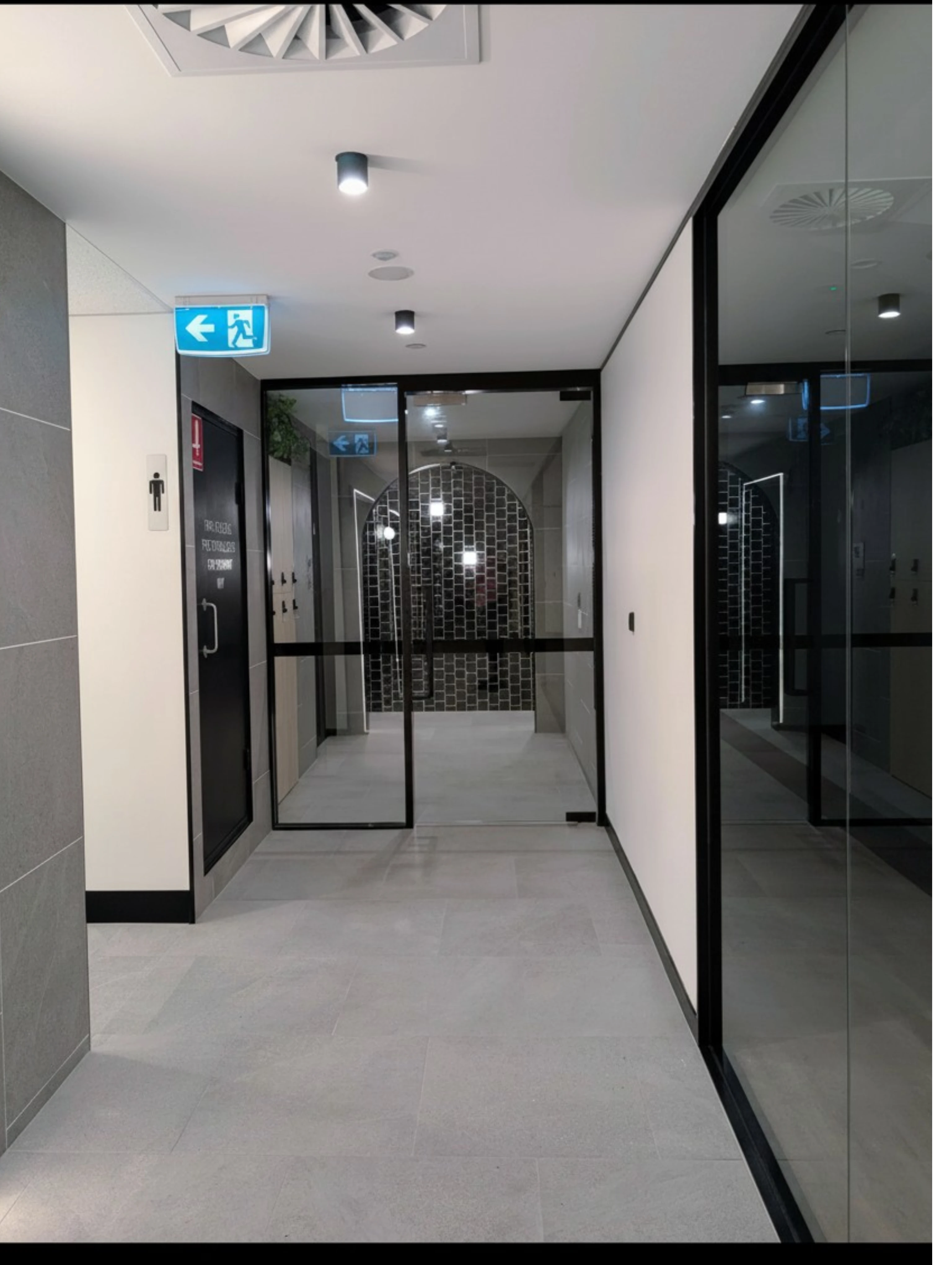
Overcoming Secondary Status by Flipping it with CapEx
The shift toward asset performance over historical labels means that property owners are not completely powerless if they own an older asset. Capital expenditure can successfully alter market perception and tenant demand.
A local example of this repositioning is 201 Charlotte Street in Brisbane. The owners executed an extensive refurbishment program that upgraded the environmental credentials of the building. They also pre-installed high-quality, speculative fitted suites. Through this targeted investment, the asset successfully repositioned itself, moving from a B-Grade market perception into an active contender for A-Grade tenants.
Ultimately, Brisbane confirms the academic thesis: when a market undergoes a post-crisis or structural shift, premium assets with strong ESG metrics, wellness amenities, and central locations thrive, while secondary stock without upgrade potential faces severe occupancy pressure.
Case Study: 93 Edward Street - The Power of Strategic Asset Management
The post-pandemic commercial market shows that property owners are not powerless when facing an older asset. A prime example of this is 93 Edward Street in Brisbane, a commercial property where the landlord took a bold, proactive approach to counter market headwinds.
Instead of allowing the building to succumb to the leasing challenges affecting secondary stock, the landlord envisioned and funded a comprehensive capital expenditure and refurbishment program. They took on the heavy lifting, transforming traditional floorplates into highly flexible, tenant-centric environments and completely modernising the building features.
As the proud property management partner, McGees Property Brisbane stepped in to bring this vision to life operationally, managing the day-to-day facilities and executing the leasing strategy. Because of the landlord's significant investment and commitment to quality, the asset was successfully insulated from market volatility. This powerful combination of landlord initiative and dedicated management completely altered the commercial outcome of the property, culminating in 93 Edward Street achieving a fully leased status in one of the most competitive leasing climates in Brisbane history.
Is Your Asset Accurately Positioned in the New Brisbane Landscape?
As the market continues to split, traditional building grades no longer guarantee asset performance. Relying on outdated market assumptions could mean leaving significant equity or rental income on the table.
Whether you are looking to benchmark your property's current worth or map out a capital expenditure strategy to maximise returns, a precise, data-driven valuation is your most powerful tool.
Contact our expert commercial valuation team today for a confidential discussion about your property portfolio.
Michael Walsh
Head of Valuation and Professional Services (Associate Director)
Mobile: 0402 810 425
Email: mwalsh@bne.mcgees.com.au
References
CBRE. (2025). Australia office marketview: Real estate insights and trends. CBRE Research.
JLL. (2025). Brisbane office market report: Tenant movements and vacancy analysis. JLL Research.
MSCI. (2024). The premium office divide: Divergence in global property valuations. MSCI Real Estate Index.
NABERS. (2026). Annual performance review: Driving sustainability in commercial office property. National Australian Built Environment Rating System.
Rader, V. (2025). Commercial office dynamics and the post-pandemic workspace. Ray White Commercial Research.
For a complete list of weekly commercial transactions in Queensland, visit McGees Wrap Up | McGees Property Brisbane
Disclaimer: The information provided in this blog is for general informational purposes only and does not constitute legal, financial, or professional advice. While we strive for accuracy, we make no guarantees regarding the completeness or timeliness of the content. Always seek independent advice before making any financial or real estate decisions. We are not liable for any loss or damages arising from your reliance on the information provided.
Liability Limited by a Scheme approved under Professional Standards Legislation