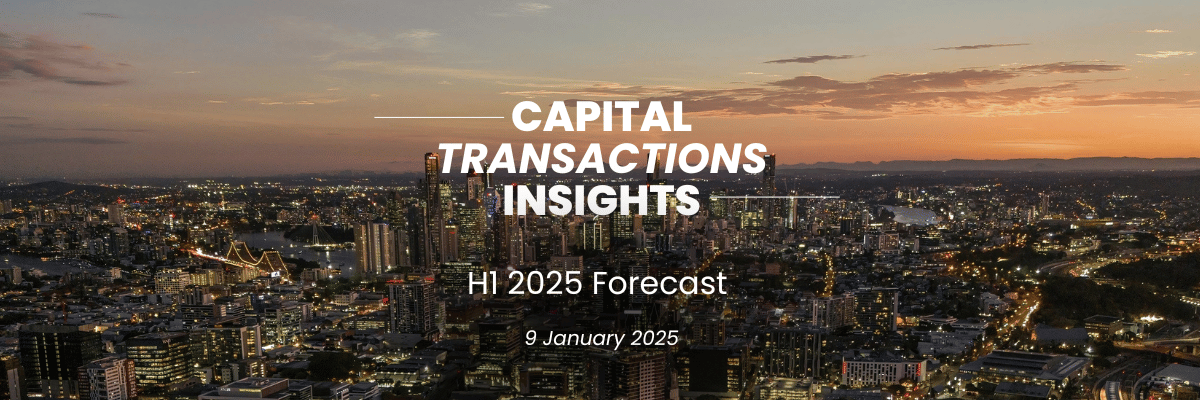
With numerous macro and micro factors shaping the market, investors are understandably cautious about 2025. However, Brisbane’s real estate sector is poised for continued growth, fueled by strong economic drivers including population increase, robust housing demand, infrastructure development, healthy consumer spending, and positive market sentiment. This report delves into the key insights and forecasts for the first half of 2025, providing a comprehensive overview of the market’s trajectory.
Interest Rates: A “High-for-Even-Longer” Scenario
Contrary to earlier predictions of rate cuts in 2024, the Reserve Bank of Australia (RBA) has maintained elevated interest rates into 2025 to combat persistent inflation. Potential rate reductions throughout 2025 hinge on the quarterly inflation figures released on January 29th, ensuring inflation remains within the 2-3% target range. The Big 4 banks are optimistic about this outcome, forecasting multiple rate cuts:
- Commonwealth Bank: First cut in February 2025, targeting a cash rate of 3.35% with 4 cuts.
- Westpac: First cut in May 2025, also aiming for a cash rate of 3.35% with 4 cuts.
- NAB: First cut in May 2025, projecting a cash rate of 3.60% with 3 cuts.
- ANZ: First cut in May 2025, anticipating a cash rate of 3.85% with 2 cuts.
Federal Election 2025: Policy Impacts on Real Estate
The Australian federal election, scheduled on or before May 17, 2025, is expected to significantly influence economic policies. Key issues such as housing affordability, cost of living, healthcare, and climate change will likely determine the election’s outcome. Policy announcements and promises will be closely scrutinized for their potential impact on the real estate market.
“Trumpeconomics” and Global Trade Tensions
The potential re-election of President Donald Trump and his proposed tariffs, particularly on China, Canada, and Mexico, could escalate geopolitical tensions and affect global trade dynamics. While Australia’s exports to the USA are largely tariff-free, indirect impacts through China’s economy may affect Australian export demand. Weaker export demand and slower growth could exert downward pressure on policy rate expectations and the Australian dollar.
Olympics 2032: 100-Day Review and Infrastructure Development
The 100-day review of the 2032 Brisbane Olympics, with a final report due on March 8, 2025, will evaluate affordability, infrastructure demand, connectivity, and deliverability. Potential developments, such as a new stadium in Victoria Park or major redevelopments of the Gabba or QSAC, are expected to stimulate investment and development in surrounding areas.
Construction Productivity and Regulatory Changes
The Queensland Government’s decision to pause Best Practice Industry Conditions (BPICs) on new government-funded construction projects aims to increase competition, reduce costs, and enhance productivity. The re-establishment of the Queensland Productivity Commission (QPC) will further shape industry policies, balancing value creation with fairness and safety, creating a more predictable regulatory environment.
Private Credit and Development Financing
Private credit is playing an increasingly significant role in funding development projects and commercial acquisitions. However, rising interest rates, construction costs, and development risks are leading private lenders to adopt a more risk-averse approach.
Foreign Investment: Leveraging a Weak AUD
The weak Australian dollar is expected to attract increased foreign investment in 2025. Compared to the 10-year averages, current spot prices against major currencies are significantly lower:
- AUD/USD: 10-year average 69.5493, current 62.3007
- AUD/SGD: 10-year average 94.4668, current 85.2254
- AUD/HKD: 10-year average 558.6846, current 483.9454
Bright Spots in Brisbane’s Real Estate Market
Office Sector
The demand for A-grade office space in Brisbane’s CBD continues to rise, driving vacancy rates to new lows and pushing rental growth. Brisbane’s A-Grade vacancy has decreased from 15.8% to 7.4% (-53.17% y-o-y). Brisbane’s CBD average rents grew by 9.6% (y-o-y) to $804/sqm, outpacing national averages.
Childcare Sector
The childcare industry is experiencing steady growth, supported by increasing demand and government initiatives. Investments in this sector, characterized by triple net leases, annual CPI increases, and long lease terms, remain attractive to private and SMSF investors.
Living Sector
Brisbane’s residential vacancy rates remain low at 1.1%, driving dwelling value increases. Domain forecasts a 5-7% increase in house prices and a 7-9% increase in unit prices for Brisbane, outperforming national averages. The Built-to-Rent and Purpose-Built Student Accommodation sectors are also experiencing significant development.
1H 2025: Risk or Opportunity?
The first half of 2025 presents both risks and opportunities in Brisbane’s commercial real estate market. Uncertainty surrounding interest rates, global economic factors, and Olympic decisions will shape the market. While some investors may adopt a cautious “wait-and-see” approach, others will seize the opportunity presented by a less competitive landscape.
For a complete list of weekly commercial transactions in Queensland, visit McGees Wrap Up | McGees Property Brisbane
Disclaimer: The information provided in this blog is for general informational purposes only and does not constitute legal, financial, or professional advice. While we strive for accuracy, we make no guarantees regarding the completeness or timeliness of the content. Always seek independent advice before making any financial or real estate decisions. We are not liable for any loss or damages arising from your reliance on the information provided.
Liability Limited by a Scheme approved under Professional Standards Legislation