Category: <span>Back to Basic</span>

Commercial Property Valuations: 6 Bank Financing Scenarios

October 17, 2026

How Certified Practising Valuers Support Commercial Property Lending Decisions

Commercial property lending is not assessed on purchase price alone. Financiers usually rely on independent valuation advice to determine market value, test income sustainability, size the loan facility and monitor ongoing credit risk.

The examples below show how valuation methodology can influence borrowing capacity across different commercial property scenarios.

Scenario Reference Table

The table summarises six common lending scenarios and explains how asset type, lease profile, valuation approach and lender risk settings can affect the final facility amount.

An educational reference on how Certified Practising Valuers determine borrowing capacity, loan-to-value limits, and credit risk.

1. Borrowing capacity

This means how much money the bank is willing to lend you.

For a commercial property, the bank looks at things like:

  • how much the property is worth
  • how much rent it earns
  • whether the tenant is reliable
  • whether you can afford the repayments
  • how risky the property is

Example:
If a property is worth $4 million, the bank may not lend the full $4 million. It might only lend $2.6 million, depending on its rules. Refer to the below table for more detail

2. Loan to Value Ratio — LVR

LVR means the loan amount compared to the property value.

Formula:

LVR=(Loan Amount / Property Value)×100

Example:
Property value = $1,000,000
Loan = $700,000

LVR = 70%

That means the bank is lending 70% of the property value, and the borrower needs to contribute the other 30%.

  • Lower LVR = safer for the bank
  • Higher LVR = riskier for the bank

3. Credit risk

Credit risk means the chance that the borrower may not be able to repay the loan.

The bank asks:

  • Can the borrower afford repayments?
  • Is the property producing reliable income?
  • Could the property value fall?
  • Could the tenant leave?
  • Would the bank recover its money if things go wrong?

Example:
A fully leased property with a long-term tenant is usually lower risk.
A vacant property or unstable tenant income is higher risk.

Scenario & Objective Asset Class & Background Valuation Methodology LVR & Facility Cap Outcome & Strategic Impact
1. Acquisition Finance Purchase Security
  • Freestanding industrial warehouse
  • Contract Price: $4,000,000
  • Passing Net Rent: $240,000 p.a.
Income Capitalisation

  • Adopted Yield: 6.00%
  • Market Value: $4,000,000
65% LVR Limit

  • Max Loan: $2,600,000
  • Deposit: $1,400,000
Settlement Confirmed

Validates that the purchase price matches fair market value, allowing credit committee approval.

2. Equity Extraction Refinancing
  • Neighbourhood retail strip
  • Historical Cost: $6,000,000
  • Existing Debt: $3,900,000
  • Extended WALE & new leases
Capitalisation & DCF

  • Higher rental cash flow
  • Updated Value: $8,500,000
65% LVR Limit

  • New Facility: $5,525,000
  • Debt to Pay: $3,900,000
$1,625,000 Released

Extracts unencumbered liquidity from asset appreciation to fund subsequent acquisitions.

3. Campus Expansion Construction Finance
  • Private independent school
  • Freehold campus grounds
  • New Sports Centre Cost: $10,000,000
Dual Stage Assessment

  • “As Is” Value: $35,000,000
  • “As If Complete”: $43,000,000
50% LVR (Special Purpose)

  • Max Facility: $21,500,000
  • Existing Debt: $5,000,000
Development Funded

Confirms project value uplift, enabling progressive drawdowns for the $10,000,000 build.

4. Risk Monitoring Covenant Review
  • Suburban commercial office
  • Existing Facility: $6,000,000
  • Anchor tenant vacates premises
Direct Capitalisation

  • Income dropped 40%
  • Softened cap rate
  • New Value: $7,500,000
65% Max Covenant LVR

  • Actual LVR: 80.0%
  • Covenant Cap: $4,875,000
Covenant Breach

Lender requires an immediate $1,125,000 principal reduction or supplementary security.

5. Adaptive Reuse Conversion & Repurposing
  • Vacant automotive showroom
  • Land Cost: $2,800,000
  • Conversion Cost: $2,200,000
  • Pre-leased childcare (15 years)
“As Complete” Capitalisation

  • Net Rent: $360,000 p.a.
  • Cap Rate: 5.75%
  • End Value: $6,260,000
60% LVR Limit

  • Approved Facility: $3,756,000
100% Works Financed

Strong lease covenant drives end value, covering the entire $2,200,000 construction budget.

6. Downside Protection Pre-Settlement Shift
  • Off-the-plan strata industrial
  • Contract Price: $1,200,000
  • 10% Deposit Paid: $120,000
Direct Comparison

  • Sub-market strata oversupply
  • Assessed Value: $1,050,000
70% LVR Limit

  • Approved Debt: $735,000
  • (Targeted: $840,000)
$345,000 Cash Shortfall

Insulates the lender against negative equity; forces the buyer to bridge the remaining equity gap.

Summary

  1. Valuation Governs Loan Sizing: Banks calculate loan facilities against the Certified Practising Valuation, not the contract price or internal project budgets.
  2. Lease Quality Drives Value: Long-term weighted average lease expiry (WALE) and strong tenant covenants compress capitalisation rates and expand equity.
  3. Ongoing Balance Sheet Risk: Periodic revaluations protect financiers against tenant loss and market contractions, directly triggering covenant remedies when LVR limits are exceeded.

Need Valuation Advice?

If you are buying, refinancing, developing or reviewing a commercial property, McGees Valuation service can provide independent valuation advice to help you understand market value, borrowing capacity and lending risk. Contact McGees today to discuss your valuation requirements and obtain professional guidance tailored to your property.

Michael Walsh – Head of Valuation and Professional Services (Associate Director)

0402 810 425

MWalsh@bne.mcgees.com.au

Mel Evans – Valuations Consultant

0419 722 134

MEvans@bne.mcgees.com.au

For a complete list of weekly commercial transactions in Queensland, visit McGees Wrap Up | McGees Property Brisbane

Disclaimer: The information provided in this blog is for general informational purposes only and does not constitute legal, financial, or professional advice. While we strive for accuracy, we make no guarantees regarding the completeness or timeliness of the content. Always seek independent advice before making any financial or real estate decisions. We are not liable for any loss or damages arising from your reliance on the information provided.

Liability Limited by a Scheme approved under Professional Standards Legislation

Latest News

McGees Wrap Up 23 October 2026

October 23, 2026

McGees Wrap Up 23 October 2026

Queensland Commercial Property Weekly Wrap-Up Week Ending 23 October 2026 South East Queensland commercial property is accelerating as the 2032 Olympic deadline forces developers and investors to lock in projects before resource bottlenecks intensify. Population growth continues to fuel exceptional…

October 23, 2026 McGees Wrap Up
McGees Wrap Up 16 October 2026

October 16, 2026

McGees Wrap Up 16 October 2026

Market Overview Queensland commercial property is drawing intense local and cross-border capital as investors race to secure assets ahead of long-term infrastructure delivery (Bleby, 2026; Lenaghan, 2026). The Brisbane central business district office sector has reached Australia's tightest vacancy rate…

October 16, 2026 McGees Wrap Up
McGees Wrap Up 9 October 2026

October 9, 2026

McGees Wrap Up 9 October 2026

Market Overview South East Queensland commercial property continues to experience fierce capital competition driven by severe supply constraints and infrastructure connectivity. While broader macroeconomic headwinds such as falling building approvals and rising retail operational costs challenge feasibility, developers and investors…

October 9, 2026 McGees Wrap Up

October 1, 2026

McGees Wrap Up 2 October 2026

Rising sovereign bond yields and tight consumer budgets are testing commercial property valuations across Queensland, but capital continues to find a home where tenant demand and infrastructure investment remain clear. Australian ten-year government bond yields have climbed past 5.3 per…

October 1, 2026 McGees Wrap Up

September 27, 2026

Understanding the Bond Proxy: How Government Bonds Shape Commercial Property Values

When evaluating commercial property, investors frequently monitor physical metrics such as foot traffic, tenant covenant strength, and occupancy rates. However, one of the most powerful forces dictating asset values takes place far outside the physical building: the bond market.

September 27, 2026 Back to Basic
View all

Over 45 years of national property excellence.

Contact our experienced team today.

First Name(Required)
Last Name(Required)

How falling residential transaction volumes ripple through the broader commercial landscape

October 14, 2026

In September 2026, national home sales dropped by 17.4 per cent over the 3 months to September 2026 compared to the previous period.

It all starts with the inflation.

The Reserve Bank of Australia (RBA) targets CPI rate between 2 to 3 percent. When it climbs over 3 percent, increasing cash rate will deter the inflation.

When interest is high, it means discretionary income will be used to service loan, mortgage and other financing needs. It will discourage consumer spending.

When people spend less, demand is weaker. Left over stock increase, business will discount to maintain sales which decrease inflation.

However, research may not agree with the standard economic theory. This theory assumes sellers are purely forward-looking: a home is worth whatever the market is willing to pay today, regardless of what the owner paid years ago.

Genesove and Mayer demonstrated that sellers do not behave this way. Instead, owners anchor psychologically to their original nominal purchase price as an arbitrary “break-even” reference point.

When market conditions soften and fair market value dips below that original figure, agreeing to sell at market price means locking in an actual monetary loss. Because the psychological pain of realising a loss is roughly twice as intense as the pleasure of making an equivalent gain, vendors actively resist accepting it.

When prices drop and interest rates rise, turnover falls because borrow capacity reduces. Sellers facing nominal losses set list prices higher than others to keep their properties on the market longer.

In this situation, buyers’ perception is “too risky to buy” vs seller’s perception, which is “too soon to sell”. The result: more stock on the market with fewer transactions.

The below table shows the many impacts when the residential sales volume drop and its impact on commercial properties.

The Turnover Freeze: How Falling Residential Sales Transmit to Commercial Property

Understanding how declining residential sales volumes impact the wider commercial property market

Contagion Flowchart

1. Primary Trigger: Interest Rate Rises Borrowing capacity contracts; buyers and vendors withdraw from active marketing.

↓

2. Core Metric: Sales Volume Freeze (-17.4% Nationally) Transaction turnover drops sharply as property owners resist selling into weaker market conditions.

↓

3. Service Transmission Channels Fewer property settlements directly reduce revenue for conveyancers, removalists, trades, and retail home fit-outs.

↓

4. Commercial Property Repercussions Large-format retail sales decline, suburban office leasing softens, warehouse storage slows, and development sites stall.

Transaction Plunge by Capital City (Quarterly)

Brisbane-26.3%

Sydney-24.8%

Perth-23.9%

Melbourne-18.4%

National Average-17.4%

Commercial Real Estate Sector Impact

Asset Class Direct Exposure Transmission Pathway Asset Management Outlook
Large-Format Retail Furniture, homewares, and whitegoods showrooms Moving home drives replacement purchases; fewer transactions mean weaker retail turnover. Reduced turnover rents, protracted lease negotiations, and pressure on bulky goods floor space.
Industrial & Logistics Wholesale storage, trade supplies, distribution centres Reduced residential renovations reduce warehouse dispatch activity for trade goods. Softening absorption rates for secondary warehouses and reduced throughput in building supply depots.
Suburban Office Conveyancing legal practices, finance brokerages, real estate suites Professional service fees contract in direct alignment with local settlement numbers. Increased risk of lease non-renewals, tenant footprint downsizing, and rising suburban vacancy.
Development Land Infill development parcels and mixed-use sites Off-the-plan presales decline, making bank funding criteria harder to satisfy. Acquisition holds, renegotiated purchase options, and reduced liquidity across development stock.

So, if you are the landlord, what you should do?

Prioritise Tenant Retention Over Aggressive Rent Increases:

  • Securing existing, paying tenants is substantially cheaper than incurring extended vacancy, tenant inducement packages, and re-leasing fees in a slowing market.

  • Approach tenants six to nine months ahead of lease expiry to negotiate renewals early, offering structured incentives or fit-out contributions in exchange for lease term security.

  • A vacant tenant takes much longer to lease out. In addition, landlords may have to offer incentive to attract new tenant. Our view is to negotiate so tenants and landlords are both beneficial.

The reason:

  • A fixed 4% annual increase is compounding, not linear. Over a 10-year term, rent increases by 48%. Over 15 years, it increases by 80%.

  • In contrast, tenant turnover, wages, and general consumer price inflation (CPI) historically track closer to 2% to 3%. When rent escalates faster than a tenant’s business revenue growth over a long horizon, the rent becomes unsustainable.
    Mr landlord, you will have a few good years but when time is tough, you need to review the lease too. If you are unsure, please send us an email at asset.admin@bne.mcgeees.com.au
    We will review and get back to you.

For a complete list of weekly commercial transactions in Queensland, visit McGees Wrap Up | McGees Property Brisbane

Disclaimer: The information provided in this blog is for general informational purposes only and does not constitute legal, financial, or professional advice. While we strive for accuracy, we make no guarantees regarding the completeness or timeliness of the content. Always seek independent advice before making any financial or real estate decisions. We are not liable for any loss or damages arising from your reliance on the information provided.

Liability Limited by a Scheme approved under Professional Standards Legislation

Latest News

McGees Wrap Up 23 October 2026

October 23, 2026

McGees Wrap Up 23 October 2026

Queensland Commercial Property Weekly Wrap-Up Week Ending 23 October 2026 South East Queensland commercial property is accelerating as the 2032 Olympic deadline forces developers and investors to lock in projects before resource bottlenecks intensify. Population growth continues to fuel exceptional…

October 23, 2026 McGees Wrap Up
McGees Wrap Up 16 October 2026

October 16, 2026

McGees Wrap Up 16 October 2026

Market Overview Queensland commercial property is drawing intense local and cross-border capital as investors race to secure assets ahead of long-term infrastructure delivery (Bleby, 2026; Lenaghan, 2026). The Brisbane central business district office sector has reached Australia's tightest vacancy rate…

October 16, 2026 McGees Wrap Up
McGees Wrap Up 9 October 2026

October 9, 2026

McGees Wrap Up 9 October 2026

Market Overview South East Queensland commercial property continues to experience fierce capital competition driven by severe supply constraints and infrastructure connectivity. While broader macroeconomic headwinds such as falling building approvals and rising retail operational costs challenge feasibility, developers and investors…

October 9, 2026 McGees Wrap Up

October 1, 2026

McGees Wrap Up 2 October 2026

Rising sovereign bond yields and tight consumer budgets are testing commercial property valuations across Queensland, but capital continues to find a home where tenant demand and infrastructure investment remain clear. Australian ten-year government bond yields have climbed past 5.3 per…

October 1, 2026 McGees Wrap Up

September 27, 2026

Understanding the Bond Proxy: How Government Bonds Shape Commercial Property Values

When evaluating commercial property, investors frequently monitor physical metrics such as foot traffic, tenant covenant strength, and occupancy rates. However, one of the most powerful forces dictating asset values takes place far outside the physical building: the bond market.

September 27, 2026 Back to Basic
View all

Over 45 years of national property excellence.

Contact our experienced team today.

First Name(Required)
Last Name(Required)

Understanding the Bond Proxy: How Government Bonds Shape Commercial Property Values

September 27, 2026

When evaluating commercial property, investors frequently monitor physical metrics such as foot traffic, tenant covenant strength, and occupancy rates. However, one of the most powerful forces dictating asset values takes place far outside the physical building: the bond market.

Recent market movements reported in The Australian Financial Review highlight this dynamic clearly. Australia’s listed property sector slumped by almost 20 per cent over the course of a year, driven largely by the 10-year Australian government bond yield climbing to approximately 5.2 per cent.

To understand why rising yields in government debt cause such ripples across property markets, one must examine the concept of real estate as a bond proxy.

What Is a Bond Proxy?

A bond proxy is an asset that shares the core economic behaviour of a fixed-income bond.

Institutional-grade commercial assets – whether an office tower leased to a blue-chip corporate tenant, a major shopping centre, or a logistics distribution centre – produce steady, predictable income streams over long-term leases lasting five, ten, or fifteen years. Because investors purchase these assets primarily for reliable yield rather than rapid speculative appreciation, institutions treat them as alternatives to holding long-dated government debt.

The Risk-Free Rate and the Yield Spread

The relationship between commercial property yields (capitalisation rates) and bond yields is defined by the risk premium:

Capitalisation Rate = Risk-Free Rate (10-Year Bond) + Risk Premium

Risk Premium represents the additional return an investor demands above the reisk-free rate to compensate for taking on the specific risks of owning a commercial real estate.

The 10-year government bond rate is widely accepted as the risk-free rate of return because the Commonwealth Government carries negligible default risk.

Commercial property carries inherent risks, including tenant insolvency, capital expenditure, leasing downtime, and liquidity constraints. Therefore, an investor demands a spread – an additional return above the bond rate – to take on those property-specific risks.

When the 10-year bond rate moves from 2.5 per cent to 5.2 per cent, that risk premium shrinks unless commercial property yields soften (expand) to restore the margin. If an asset produces a static net operating income of $1,000,000, an expansion in yield has an immediate impact on asset value:

  • At a 5.0% yield, the asset value is $20,000,000
  • At a 6.0% yield, the asset value falls to $16,666,667

Without income growth to counter the shift, rising bond yields force capital values downward.

Why Listed REITs Move First

Direct commercial property sales require months of due diligence, financing approvals, and settlement negotiations. As a result, direct transaction data often lags broader financial market conditions by six to twelve months.

In contrast, Australian Real Estate Investment Trusts (A-REITs) trade continuously on the Australian Securities Exchange. When bond yields rise, listed investors price in higher borrowing costs and widening return requirements immediately. Analysts from Citi observed that listed property trusts suffer an average negative return of roughly 14.9 per cent for every 100-basis-point increase in the 10-year bond yield.

For unlisted property owners and commercial valuers, listed REIT pricing acts as an early indicator of where private book values will eventually need to adjust.

The Inflation Defence: Bonds vs Bricks and Mortar

While commercial real estate shares the yield sensitivity of fixed-income debt, it holds an essential structural advantage: income growth.

Standard government bonds pay a fixed coupon that loses purchasing power when inflation accelerates. High-grade commercial leases, however, frequently incorporate annual rent review mechanisms linked to the Consumer Price Index (CPI) or structured annual increases of 3.0 to 4.0 per cent.

When rental income increases regularly, it offsets part of the capital decline caused by expanding cap rates. Assets underpinned by robust CPI adjustments, particularly well-located retail and industrial properties, typically demonstrate greater resilience during periods of higher bond yields than assets tied to flat, long-term rents.

Strategic Takeaways for Commercial Owners

  1. Focus on Cash Flow Resiliency: Yield expansion is driven by macroeconomic debt markets. Protecting capital values requires active management, maintaining high occupancy, and securing indexed annual rent increases.
  2. Account for the Refinancing Gap: In a restrictive interest rate environment, debt costs can exceed initial asset yields, creating negative leverage. Portfolios must be stress-tested against tighter debt covenants and higher loan-to-value ratios.
  3. Recognise Counter-Cyclical Windows: Bond cycles do not last indefinitely. When cash rates and bond yields reach their peak, market consensus begins anticipating eventual rate cuts. When bond yields decline, the same mechanism operates in reverse, providing a strong catalyst for capital growth and yield compression across quality real estate.

Understanding the mechanics of the bond proxy enables property owners and investors to see beyond short-term market noise and position their portfolios effectively through every phase of the interest rate cycle.

For a complete list of weekly commercial transactions in Queensland, visit McGees Wrap Up | McGees Property Brisbane

Disclaimer: The information provided in this blog is for general informational purposes only and does not constitute legal, financial, or professional advice. While we strive for accuracy, we make no guarantees regarding the completeness or timeliness of the content. Always seek independent advice before making any financial or real estate decisions. We are not liable for any loss or damages arising from your reliance on the information provided.

Liability Limited by a Scheme approved under Professional Standards Legislation

Latest News

McGees Wrap Up 23 October 2026

October 23, 2026

McGees Wrap Up 23 October 2026

Queensland Commercial Property Weekly Wrap-Up Week Ending 23 October 2026 South East Queensland commercial property is accelerating as the 2032 Olympic deadline forces developers and investors to lock in projects before resource bottlenecks intensify. Population growth continues to fuel exceptional…

October 23, 2026 McGees Wrap Up
McGees Wrap Up 16 October 2026

October 16, 2026

McGees Wrap Up 16 October 2026

Market Overview Queensland commercial property is drawing intense local and cross-border capital as investors race to secure assets ahead of long-term infrastructure delivery (Bleby, 2026; Lenaghan, 2026). The Brisbane central business district office sector has reached Australia's tightest vacancy rate…

October 16, 2026 McGees Wrap Up
McGees Wrap Up 9 October 2026

October 9, 2026

McGees Wrap Up 9 October 2026

Market Overview South East Queensland commercial property continues to experience fierce capital competition driven by severe supply constraints and infrastructure connectivity. While broader macroeconomic headwinds such as falling building approvals and rising retail operational costs challenge feasibility, developers and investors…

October 9, 2026 McGees Wrap Up

October 1, 2026

McGees Wrap Up 2 October 2026

Rising sovereign bond yields and tight consumer budgets are testing commercial property valuations across Queensland, but capital continues to find a home where tenant demand and infrastructure investment remain clear. Australian ten-year government bond yields have climbed past 5.3 per…

October 1, 2026 McGees Wrap Up
View all

Over 45 years of national property excellence.

Contact our experienced team today.

First Name(Required)
Last Name(Required)

Should You Approve a new Tobacconist Tenant in Queensland? A Landlord Risk Assessment Framework

September 15, 2026

Around five years ago in Queensland, leasing a retail strip shop to a tobacconist was considered a stable, low-maintenance tenancy. Many commercial landlords saw tobacconist operators exercise their options, renew agreements, or sign long-term five-year leases. Recently, consecutive enforcement raids by authorities targeting illicit trade have forced property owners to reconsider this tenant profile entirely.

With organised crime infiltrating suburban shopfronts, commercial property managers are navigating complex operational hazards rather than standard retail tenancies. Property owners face severe collateral damage, including late-night arson attacks, police closure orders, and uninsurable risks. Accepting a tobacconist tenant is no longer just a calculation of rental yield; landlords must evaluate whether their physical asset and public liability policies can withstand the fallout, and whether building insurers will honour claims following a catastrophic incident.

1) Cause-and-Effect Chain

In 2010, the Commonwealth Government introduced a 25 per cent excise jump, followed by a series of 12.5 per cent annual compounding increases from 2013 to 2020, and subsequent annual increases through to 2025 (Australian Government Treasury, 2019). This tax policy was paired with mandatory plain packaging and flavour bans.

When compounding excise lifts retail costs to between $45 and $60 per legal packet, economic principles dictate that raising tax rates past an optimal threshold contracts total revenue rather than expanding it. Nicotine demand did not disappear; instead, consumer purchasing shifted directly into untaxed black-market alternatives.

As a result, Commonwealth tobacco excise collections plummeted from $16.27 billion AUD in 2019-20 down to $7.77 billion in 2024-25, with Treasury estimates forecasting just $4.13 billion AUD for 2025-26.

Organised crime syndicates capitalised on these margins and moved directly into suburban retail strips across Australia, triggering over 250 firebombings and multiple homicides linked to violent extortion rackets.

Queensland: Under state legislation, commercial landlords face severe penalties if they fail to act against tenants selling illicit tobacco or vapes. Individual property owners risk fines exceeding $160,000, up to one year of imprisonment, or both, while corporate entities face penalties exceeding $800,000. The framework also extends temporary closure orders up to three months on the spot and up to twelve months through the courts.

Non-compliant retailers face up to two years of imprisonment, alongside maximum penalties of $322,600 for individuals and $1.6 million for corporate entities.

Action Plan for Landlords with Tobacconist Tenants

Because these issues were not standard leasing considerations five years ago, commercial property owners must implement a rigorous risk framework.

If you have an existing tobacconist, you should consider the below

Action 1: Immediate Insurance Disclosure and Audit

  • Written Insurer Notification: Formally notify the building underwriter that a tenant retails tobacco, vaping, or related items. Failing to disclose material retail risk can void an entire property policy following an arson event.
  • Policy Exclusion Verification: Review building policies specifically for illegal enterprise exclusions, deliberate fire exclusions, or conditions refusing indemnity if unapproved contraband was stored on the premises.
  • Cross-Tenancy Liability: Confirm that public liability limits adequately cover catastrophic structural damage
  • Ask for Tenant Insurance: Ensure adjoining retail tenants carry up-to-date, comprehensive business insurance, public liability and plate glass insurance.

Action 2: Permitted Use and Regulatory Compliance Verification

  • Strict Permitted Use: Restrict permitted use covenants strictly to the “lawful retail sale of licensed tobacco products”, explicitly prohibiting unapproved goods, non-compliant packaging, or illicit stock.
  • Request of Documentary Proof: Obligate the tenant to submit current retail tobacco licences, local government health permits, and business registration certificates on an annual basis.
  • Routine Physical Inspections: Exercise contractual inspection rights to verify the shop floor has not installed concealed secondary storage rooms, unapproved structural partitions, or covered display cabinets.

Action 3: Lease Default Triggers and Termination Rights

  • Immediate Default upon Closure Orders: Draft lease covenants ensuring any interim or formal closure order issued by health authorities or the police triggers an immediate, incurable breach of lease.
  • Increased Security Guarantees: Require substantial bank guarantees (at least six months gross rent) to cover make-good requirements, and rental shortfalls during legal investigations.

Action 4: Physical Fire Separation and Site Security

  • Fire Boundary Separation: Inspect and certify the fire-resistance level of party walls, ceiling cavities, and common service ducting between the tobacconist and neighboring tenancies.
  • Landlord-Controlled CCTV: Maintain landlord-managed external surveillance covering shopfront display windows, rear service doors, and delivery docks.
  • Surrounding Tenant Communication: Maintain an active reporting channel with adjoining retailers to identify suspicious out-of-hours deliveries, threats, or property tampering promptly.

If you own retail property in Queensland and want to ensure your lease agreements, insurance disclosures, and risk management procedures protect your asset against non-compliant tenancies, speak with our team.

Contact McGees Property Brisbane today for tailored leasing advice, risk audits, and professional commercial asset management to safeguard your investments.

For a complete list of weekly commercial transactions in Queensland, visit McGees Wrap Up | McGees Property Brisbane

Disclaimer: The information provided in this blog is for general informational purposes only and does not constitute legal, financial, or professional advice. While we strive for accuracy, we make no guarantees regarding the completeness or timeliness of the content. Always seek independent advice before making any financial or real estate decisions. We are not liable for any loss or damages arising from your reliance on the information provided.

Liability Limited by a Scheme approved under Professional Standards Legislation

Latest News

McGees Wrap Up 23 October 2026

October 23, 2026

McGees Wrap Up 23 October 2026

Queensland Commercial Property Weekly Wrap-Up Week Ending 23 October 2026 South East Queensland commercial property is accelerating as the 2032 Olympic deadline forces developers and investors to lock in projects before resource bottlenecks intensify. Population growth continues to fuel exceptional…

October 23, 2026 McGees Wrap Up
McGees Wrap Up 16 October 2026

October 16, 2026

McGees Wrap Up 16 October 2026

Market Overview Queensland commercial property is drawing intense local and cross-border capital as investors race to secure assets ahead of long-term infrastructure delivery (Bleby, 2026; Lenaghan, 2026). The Brisbane central business district office sector has reached Australia's tightest vacancy rate…

October 16, 2026 McGees Wrap Up
McGees Wrap Up 9 October 2026

October 9, 2026

McGees Wrap Up 9 October 2026

Market Overview South East Queensland commercial property continues to experience fierce capital competition driven by severe supply constraints and infrastructure connectivity. While broader macroeconomic headwinds such as falling building approvals and rising retail operational costs challenge feasibility, developers and investors…

October 9, 2026 McGees Wrap Up

October 1, 2026

McGees Wrap Up 2 October 2026

Rising sovereign bond yields and tight consumer budgets are testing commercial property valuations across Queensland, but capital continues to find a home where tenant demand and infrastructure investment remain clear. Australian ten-year government bond yields have climbed past 5.3 per…

October 1, 2026 McGees Wrap Up
View all

Over 45 years of national property excellence.

Contact our experienced team today.

First Name(Required)
Last Name(Required)

Why Letting a Residential Manager Run Your Commercial Property Costs You a Small Fortune

September 3, 2026

If you rent out a suburban house or an apartment, the job is straightforward. You find a reliable tenant, make sure they take care of the place, and send a plumber when a tap leaks.

Because of that simplicity, many building owners assume that any rental property is basically the same. They hand the keys of a warehouse, medical centre, or retail shop to a residential property manager.

That single decision can quietly drain tens of thousands of dollars from your pocket.

Managing commercial property is not simply managing tenants. It is managing an operating business asset. Here is how standard housing practices create expensive leaks in your investment.

1. The Missing Tax Invoices and GST

Residential rent does not attract Goods and Services Tax (GST), and residential tenants rarely receive a monthly bill. The tenant simply pays a fixed amount, and a standard software program records the payment.

Commercial property runs under entirely different rules. Commercial rents and outgoings usually attract 10% GST. The landlord must issue a valid tax invoice that clearly shows the rent, outgoings, GST, and total amount payable.

Standard residential software is often not designed to manage these calculations or generate compliant commercial tax invoices. When a residential manager attempts to track this manually using basic spreadsheets, errors can accumulate quickly. That can leave the owner with an expensive accounting problem to fix at tax time.

2. Skipping the Annual Outgoings Wash-Up

In a residential lease, the landlord usually covers council rates, water, building insurance, and other property ownership costs.

In a commercial lease, the arrangement can be very different. A tenant may sign a net lease, where they agree to reimburse the landlord for certain property expenses. These may include council rates, building insurance, body corporate levies, water charges, and general maintenance. These expenses are commonly referred to as variable outgoings.

Usually, the tenant pays an estimated monthly amount toward these outgoings during the year. At the end of the financial year, the commercial property manager must complete an outgoings reconciliation. This means comparing the actual expenses paid by the landlord against the amount recovered from the tenant during the year.

If the tenant paid too little, the manager must recover the shortfall. If the tenant paid too much, the manager must arrange the appropriate credit or adjustment.

Residential managers rarely have experience with this process. They may forget to complete the annual wash-up, fail to adjust budgets when expenses increase, or miss recoverable costs altogether. When that happens, the owner absorbs costs that should have been recovered from the tenant.

3. Missed Rent Reviews That Crush Your Asset Value

Residential leases usually run for six or twelve months. Commercial leases often run for three, five, or ten years.

Because commercial leases run for longer periods, they commonly include scheduled rent reviews. Each year, on the lease anniversary, the rent may increase by a fixed percentage, by CPI, or by a market review, depending on the lease terms.

This is not just a minor administration task. Commercial property values are closely linked to the net income the property produces. If a rent review is missed, the owner loses income and may also reduce the capital value of the asset.

Calculation Result
Current annual rent $100,000 $100,000
Annual rent review $100,000 × 4% $4,000 increase
New annual rent after review $100,000 + $4,000 $104,000
Lost income if review is missed $104,000 – $100,000 $4,000 per year
Estimated value impact at 7% yield $4,000 ÷ 7% Approximately $57,143

In this example, a missed 4% rent review on a $100,000 annual lease does not only cost the owner $4,000 in yearly cash flow. If the property is valued on a 7% yield, that missed income can reduce the property’s value by approximately $57,143.

A single overlooked calendar date can wipe a significant amount from the value of a commercial asset.

4. The Risk of Month-to-Month Rollovers

Commercial leases often include strict option periods. If a tenant wants to extend their lease for another term, they must usually give formal written notice within a specific window, often three to six months before the lease expires.

If a manager misses this deadline, the lease may expire and the tenant may move onto a month-to-month arrangement.

While a rolling agreement is common in residential rentals, it can create major problems in commercial real estate. Banks and buyers often view a month-to-month commercial tenant as a higher risk because the tenant can leave on short notice. This can affect refinancing, future sale negotiations, and the overall value of the property.

Protecting Your Real Estate Asset

A commercial property is an income-generating asset. Protecting its cash flow and capital value requires commercial property management experience, proper lease administration, reliable financial tracking, and disciplined diary management.

A residential property manager may be excellent at managing houses and apartments, but commercial property is a different discipline. The wrong management approach can cost an owner far more than they realise.

If you own a commercial property, make sure it is managed by someone who understands commercial leases, outgoings, GST, rent reviews, option dates, and asset value. The right commercial manager does not just collect rent. They protect the income, compliance, and long-term value of your investment.

Want a review of your lease?

email me at ismith@bne.mcgees.com.au

I will get back to you as soon as I can.

Still here, ok, here is the summary

Is Your Commercial Asset Being Managed Like a House?

Using a residential property manager or standard residential management software could quietly leak thousands in cash flow and devaluing your commercial property

Management Feature Typical Residential Agency Our Specialised Commercial Team
Tax & GST Compliance ✕
Limited GST/Invoice capability. Most residential management software cannot apply GST or issue compliant Tax Invoices, leaving you exposed to ATO audits.
✓
Full Trust Accounting. Automated monthly Tax Invoices with accurate GST calculation and detailed ATO-compliant statements.
Outgoings Wash-Ups ✕
Absorbed Costs. They typically ignore annual reconciliations. Landlords end up paying for council rates, insurance, and repairs out of pocket. They can only do Gross Lease
✓
100% Cost Recovery. Precise monthly outgoings budgeting and thorough annual “wash-ups” to ensure tenants pay their exact contract share. If you have net lease agreement with your tenant. We can maximise your Outgoings Recovery.
Rent Reviews ✕
Missed Rent Review. Passive management leads to missed CPI or fixed reviews, permanently stunting your cash flow and equity.
✓
Diarised Rent Review. CPI review, fixed, and market reviews tracked via automated, calendar-locked systems to drive your asset’s value.
Lease Option Windows ✕
Slippage Risk. Missed deadlines let tenants slide to month-to-month terms, which can devalue your asset or block bank refinancing.
✓
Proactive Management. Lease deadlines are actively managed 6 months out. Option windows are locked in to maintain security. We remind your tenants the lease expiry dates, the earliest date and the last date to exercise their options. We also negotiate the new lease term, provide current market value.
Financial Security ✕
Basic Bonds Only. Residential PMs rarely understand complex bank guarantees or fail to index them as rent rises.
✓
Bank Guarantees. We can help you with your bank guarantee increase or replacement from your tenants.
For Cash Bond, we hold in our Trust Account and ensure the amount cover a specific period of the rent and outgoing base on the lease.

Don’t let a residential property manager practice on your multi-million dollar commercial investment.

For a complete list of weekly commercial transactions in Queensland, visit McGees Wrap Up | McGees Property Brisbane

Disclaimer: The information provided in this blog is for general informational purposes only and does not constitute legal, financial, or professional advice. While we strive for accuracy, we make no guarantees regarding the completeness or timeliness of the content. Always seek independent advice before making any financial or real estate decisions. We are not liable for any loss or damages arising from your reliance on the information provided.

Liability Limited by a Scheme approved under Professional Standards Legislation
Latest News

McGees Wrap Up 23 October 2026

October 23, 2026

McGees Wrap Up 23 October 2026

Queensland Commercial Property Weekly Wrap-Up Week Ending 23 October 2026 South East Queensland commercial property is accelerating as the 2032 Olympic deadline forces developers and investors to lock in projects before resource bottlenecks intensify. Population growth continues to fuel exceptional…

October 23, 2026 McGees Wrap Up
McGees Wrap Up 16 October 2026

October 16, 2026

McGees Wrap Up 16 October 2026

Market Overview Queensland commercial property is drawing intense local and cross-border capital as investors race to secure assets ahead of long-term infrastructure delivery (Bleby, 2026; Lenaghan, 2026). The Brisbane central business district office sector has reached Australia's tightest vacancy rate…

October 16, 2026 McGees Wrap Up
McGees Wrap Up 9 October 2026

October 9, 2026

McGees Wrap Up 9 October 2026

Market Overview South East Queensland commercial property continues to experience fierce capital competition driven by severe supply constraints and infrastructure connectivity. While broader macroeconomic headwinds such as falling building approvals and rising retail operational costs challenge feasibility, developers and investors…

October 9, 2026 McGees Wrap Up

October 1, 2026

McGees Wrap Up 2 October 2026

Rising sovereign bond yields and tight consumer budgets are testing commercial property valuations across Queensland, but capital continues to find a home where tenant demand and infrastructure investment remain clear. Australian ten-year government bond yields have climbed past 5.3 per…

October 1, 2026 McGees Wrap Up
View all

Over 45 years of national property excellence.

Contact our experienced team today.

First Name(Required)
Last Name(Required)

Decoding the $1 Trillion Debt Milestone: What It Means for Commercial Property

August 26, 2026

The editorial from The Australian underscores a pivotal economic milestone: Australia's gross government debt reaching the $1 trillion mark, with annual interest obligations forecast to hit $29.5 billion this year and over $42.2 billion before the decade ends.

When public debt expands to this scale, mounting interest costs force government bond yields to remain elevated. This dynamic does not stay confined to public finances; it ripples directly through wholesale money markets into the commercial real estate sector.

1. Analysis of The Australian Article: Macro Pressures

The editorial outlines several core structural pressures across the economy:

  • Refinancing at Elevated Rates: Debts accrued during historic low-interest periods must now be rolled over at higher bond yields, consuming significant public revenue.When the government issues debt through bonds, those bonds have a fixed maturity date and a fixed interest rate. During the 2020 to 2021 pandemic period, the Australian government borrowed heavily at record low interest rates of around 1.0 to 1.5 per cent.

    When those bonds reach their expiration date, the government does not have hundreds of billions of dollars in surplus cash to pay off the principal balance. Instead, it must “roll over” the debt, which means issuing new bonds to pay off the maturing ones.

    Because current market bond yields are now sitting close to 4.8 to 5.0 per cent, the replacement debt comes with a much higher interest bill:

    • Debt Rollover: Replacing an expiring loan with a new loan rather than paying it off in full.
    • Higher Yields: The interest rate the government must pay on the new loan is roughly three to four times higher than the rate on the old loan.
    • Consuming Public Revenue: Annual interest payments on the national debt increase substantially (forecast to rise from earlier low baselines toward $29.5 billion and beyond $42 billion annually, as detailed in the PBO Medium-Term Budget Outlook). This redirects money from tax collections into interest payments rather than infrastructure, health, or tax relief.
  • Persistent Inflation and Government Outlays: Sustained public expenditure fuels inflation, forcing the Reserve Bank of Australia to keep monetary conditions restrictive. When government spending remains high while the economy is already stretched, it keeps upward pressure on prices and prevents interest rates from falling.
    • Sustained Public Expenditure: Federal and state governments continue spending large sums on major infrastructure, procurement, and public services.

    • Fuels Inflation: This continuous injection of money competes with the private sector for limited resources, materials, and skilled labour. When demand outstrips supply across the economy, prices and wages rise, keeping inflation persistent.

    • Restrictive Monetary Conditions: The primary goal of the Reserve Bank of Australia is to bring inflation back within its 2 to 3 per cent target band. To counter the stimulating effects of strong government demand, the RBA must keep the cash rate target elevated at a restrictive level (such as 4.35 per cent), making borrowing expensive for businesses and households to cool down total economic activity.

  • Per Capita Contraction: Australia has recorded multiple consecutive quarters of per capita economic decline, cooling private sector wage growth and increasing unemployment to 4.5 per cent.1. Per Capita Economic Decline (The “Per Capita Recession”)
    Headline Gross Domestic Product (GDP) measures the total economic output of the entire country. However, GDP per capita divides that total output by the total population.

    When population growth (largely driven by net overseas migration) increases faster than total economic output, the average slice of the economic pie for each individual shrinks. Even if the national economy appears to grow overall on paper, the average standard of living and output per individual has contracted over consecutive quarters.

    2. Cooling Private Sector Wage Growth
    Because individual economic demand and productivity are softening, private businesses experience tighter profit margins and weaker consumer spending. As business revenue growth slows, employers reduce hiring budgets and become reluctant to offer substantial pay rises, causing wage growth across the private sector to moderate.

    3. Unemployment Rising to 4.5 Per Cent
    As business expansion stalls and new job creation fails to keep pace with the influx of new workers entering the labour force, the balance between labour supply and demand shifts. This causes the unemployment rate to trend upward from historic lows toward 4.5 per cent, signalling easing pressure in the employment market.

2. Macro and Micro Level Impact on Commercial Property

The Macro Level (The Broad Economy)

  • Higher Borrowing Costs: As government bond yields hover near 5 per cent, commercial banks raise interest rates for property loans, increasing finance costs for new projects and acquisitions.
  • Reduced Tenant Demand: Restrictive monetary policy slows economic activity, leading businesses to reduce capital expenditure and halt expansion across office, retail, and industrial assets.
  • Surging Construction Costs: High inflationary pressure raises materials, labour, and maintenance costs, stalling new supply from entering the market.

The Micro Level (Individual Assets and Leases)

  • Falling Capital Values: Higher borrowing rates cause investors to seek greater returns, resulting in capitalisation rate expansion that compresses asset valuations even when rental income remains stable.
  • Squeezed Landlord Cash Flow: Investors holding variable-rate loans face higher debt service obligations, reducing net cash flow if rental growth fails to match rate increases.
  • Tenant Distress and Vacancy Risks: Elevated operating costs squeeze tenant margins, raising the risk of arrears, lease defaults, and increased vacancy.
  • Lease Dynamics and Rent Reviews: While CPI-linked rent adjustments increase headline revenue, the commercial reality depends on whether tenants possess sufficient margins to absorb these increments.

Direct Impact on Commercial Property

  • Retail Assets: Weaker individual purchasing power directly reduces discretionary spending in retail centres, leading to slower turnover and rent pressure.
  • Office & Industrial Assets: Slower hiring and rising unemployment reduce corporate expansion plans, lowering demand for net additional office and warehouse floor space.

3. The Domino Effect: Why Bonds Yields Control Property

Step 1: Mounting Public Debt ($1 Trillion) Government requires massive debt issuance to finance ongoing fiscal deficits.

↓

Step 2: Elevated Government Bond Yields (~5.0%) Yields must remain high to attract capital, resetting the risk-free rate benchmark.

↓

Step 3: Wholesale Bank Funding Costs Increase Banks borrow in wholesale debt markets where pricing moves in lockstep with bond yields.

↓

Step 4: Commercial Loan Interest Rates Surge (8.0%+) Banks add wholesale costs and credit risk margins on top of the 5 per cent bond base.

↓

Step 5: Stalled Development Construction holding costs spike; projects fail financial feasibility checks. Step 6: Softening Asset Values Cap rates decompress to deliver acceptable yields above high borrowing costs.

Here is a step-by-step breakdown of why government bond yields dictate commercial loan rates, and exactly how that chain reaction happens.

1. Government Bonds Set the Baseline

Government bonds are considered the safest possible investment because it is highly unlikely the Australian government will default on its debt. Because they are so safe, the interest rate (or yield) on these bonds sets the baseline for the entire financial system. This is often called the “risk-free rate”. If the government is offering a 5 per cent return, that becomes the absolute minimum return any lender will accept.

2. The Risk Premium

Banks and financial institutions ask a simple question: why would we lend money to a commercial property project, which carries significant risk, if we could get a guaranteed 5 per cent return from the government?

To justify taking on the risk of a commercial loan, banks must charge a “risk premium” on top of the government rate. If the bond yield rises, the commercial loan rate must rise with it to maintain that premium. For example, if the bond yield is 5 per cent, a bank must charge perhaps 7 or 8 per cent for a commercial loan to make the risk worthwhile.

The Question Every Commercial Credit Committee Asks:

“Why should we risk lending on a commercial property project at 5.5% or 6.0% when we can receive a guaranteed 5.0% return on Australian Government bonds with zero default risk?”

Option A: Government Bonds

~5.0% Yield

  • Zero default risk (AAA benchmark)
  • Immediate liquidity
  • Baseline hurdle rate
Option B: Commercial Real Estate Loan

~8.0% Interest

  • 5.0% Base Rate (Bond benchmark)
  • + 1.5% Wholesale bank funding spread
  • + 1.5% Risk premium (tenant default & vacancy risk)

3. Banks Face Higher Funding Costs

Banks do not just lend out the cash deposits of everyday customers; they also borrow billions of dollars from global wholesale financial markets to fund their large-scale commercial lending. The interest rates in these wholesale markets are inextricably linked to government bond yields. When bond yields rise, it becomes more expensive for the bank to borrow the money they need. To maintain their own profit margins, the bank has no choice but to pass those higher borrowing costs directly onto developers and investors.

4. The Squeeze on Developers and Investors

When the bank raises its commercial interest rates, the mathematics of property development and investment change drastically:

  • For Developers: A multi-million dollar construction loan at 8 per cent instead of 4 per cent adds massive interest costs to a project. If the final sale value or the projected rental income of the new building cannot cover those extra costs, the project is no longer profitable and will simply not be built.
  • For Investors: When an investor buys an existing commercial property, they usually use a large loan to finance the acquisition. If the interest payments on that loan go up, it eats directly into the profit they make from the tenant’s rent. If the cost of borrowing becomes higher than the income the property generates, investors will stop buying, which stalls activity across the market.

4. Summary Matrix: Transmission to Real Estate

The Macro-to-Micro Transmission Flow

1. The Trigger: High Bond Yields (~5.0%)

Transmission Deep Dive:
As public debt hits $1 trillion, the government must issue more bonds at higher yields to attract investors. This establishes a high “risk-free” benchmark across the entire financial system, instantly raising wholesale borrowing costs for banks.

Commercial Property Impact:
Buyers demand a higher return to justify the risk. Capitalisation rates expand, meaning overall asset values adjust downward even if rental income stays the same.

↓

2. The Bottleneck: Elevated Construction Loans

Transmission Deep Dive:
Banks pass their higher wholesale funding costs directly to commercial borrowers. A development loan that previously cost 4% to 5% now exceeds 8%+, adding millions in interest expenses to a project’s holding costs.

Commercial Property Impact:
New building feasibilities fail. The supply pipeline of new stock tightens, which actively protects and preserves the rental value of existing high-quality assets. In a high interest rate environment, property valuations are highly sensitive to income security. Capitalisation rates are expanding, so the best way to defend the capital value of the asset is through a secure rent revenue.
Landlords need to proactively renew strong tenants well before their leases expire. Take advantage on the lack of competing new stock by reducing lease incentives and investing in targeted cosmetic or energy-efficiency upgrades to attract businesses seeking premium spaces. Finally, rigorously audit your building outgoings and maintenance contracts to ensure the total cost of occupancy remains sustainable for your tenants during this inflationary period

↓

3. The Demand Shock: Per Capita Contraction

Transmission Deep Dive:
High interest rates successfully slow down the broader economy. Consumer discretionary spending drops, and business turnover cools, leading to a “per capita recession” where individual economic output shrinks.

Commercial Property Impact:
Tenant profit margins are squeezed. Landlords face a heightened risk of tenant arrears, lease defaults, and rising vacancy rates across secondary office and retail spaces.
With tenant profit margins under severe pressure, landlords must prioritise tenant retention by opening clear lines of communication long before financial distress leads to lease defaults. Rather than risking prolonged vacancy in secondary assets, consider negotiating structured, short-term lease modifications to keep proven operators actively trading. Furthermore, proactively audit your rent roll to identify vulnerable sectors and explore repositioning difficult vacancies into smaller, flexible suites to attract a broader range of resilient businesses.

↓

4. The Crunch: Refinancing Maturing Debt

Transmission Deep Dive:
Existing property investors who secured fixed-rate loans 2 to 3 years ago at 3% are now reaching the end of their loan terms. They are forced to refinance their commercial mortgages onto the new 7% to 8% market rates.

Commercial Property Impact:
The sudden jump in interest repayments causes a plunge in Debt Service Coverage Ratios (DSCR). This triggers bank covenant breaches, prompting forced equity injections or urgent asset disposals.

Asset Management Priority: When interest rates stay higher for longer, capital value cannot rely on market compression. Property owners must preserve Net Operating Income (NOI) through tenant retention, tight outgoings management, and rigorous credit control. Contact McGees Property on 07 3231 9777 to book an appointment to see how we can help you improve your asset.

For a complete list of weekly commercial transactions in Queensland, visit McGees Wrap Up | McGees Property Brisbane

Disclaimer: The information provided in this blog is for general informational purposes only and does not constitute legal, financial, or professional advice. While we strive for accuracy, we make no guarantees regarding the completeness or timeliness of the content. Always seek independent advice before making any financial or real estate decisions. We are not liable for any loss or damages arising from your reliance on the information provided.

Liability Limited by a Scheme approved under Professional Standards Legislation

Latest News

McGees Wrap Up 23 October 2026

October 23, 2026

McGees Wrap Up 23 October 2026

Queensland Commercial Property Weekly Wrap-Up Week Ending 23 October 2026 South East Queensland commercial property is accelerating as the 2032 Olympic deadline forces developers and investors to lock in projects before resource bottlenecks intensify. Population growth continues to fuel exceptional…

October 23, 2026 McGees Wrap Up
McGees Wrap Up 16 October 2026

October 16, 2026

McGees Wrap Up 16 October 2026

Market Overview Queensland commercial property is drawing intense local and cross-border capital as investors race to secure assets ahead of long-term infrastructure delivery (Bleby, 2026; Lenaghan, 2026). The Brisbane central business district office sector has reached Australia's tightest vacancy rate…

October 16, 2026 McGees Wrap Up
McGees Wrap Up 9 October 2026

October 9, 2026

McGees Wrap Up 9 October 2026

Market Overview South East Queensland commercial property continues to experience fierce capital competition driven by severe supply constraints and infrastructure connectivity. While broader macroeconomic headwinds such as falling building approvals and rising retail operational costs challenge feasibility, developers and investors…

October 9, 2026 McGees Wrap Up

October 1, 2026

McGees Wrap Up 2 October 2026

Rising sovereign bond yields and tight consumer budgets are testing commercial property valuations across Queensland, but capital continues to find a home where tenant demand and infrastructure investment remain clear. Australian ten-year government bond yields have climbed past 5.3 per…

October 1, 2026 McGees Wrap Up
View all

Over 45 years of national property excellence.

Contact our experienced team today.

First Name(Required)
Last Name(Required)

Preparing for the 1 July 2026 AUSTRAC Regulations in Commercial Real Estate

June 25, 2026

AML/CTF Reforms: What They Mean for Commercial Real Estate

From 1 July 2026, Australia’s commercial real estate industry will enter a new regulatory era.

The Australian Government is expanding the Anti-Money Laundering and Counter-Terrorism Financing Act 2006 (AML/CTF Act) to include the real estate sector. Regulated by the Australian Transaction Reports and Analysis Centre (AUSTRAC), these reforms will apply to commercial real estate businesses that provide designated services, including brokering the sale, purchase, or transfer of real estate.

The reforms are designed to strengthen Australia’s ability to detect and prevent money laundering, terrorism financing and other serious financial crimes, bringing the real estate sector into line with other regulated industries such as banking and financial services.

Why are these reforms being introduced?

Property transactions can involve significant sums of money, making the real estate sector attractive to criminals seeking to disguise or legitimise the proceeds of crime.

AUSTRAC has identified the Australian real estate sector as being at a high risk of money laundering. The new legislation is intended to increase transparency, strengthen due diligence, and provide greater protection for businesses, clients and the wider community.

These obligations are not unique to McGees Property – they are mandatory requirements that will apply to regulated real estate businesses across Australia.

What does this mean for our clients?

As part of these reforms, our onboarding processes at McGees Property will change.

From 1 July 2026, you will be asked to provide additional information before we can provide certain regulated real estate services. This is a legal requirement under the AML/CTF Act and forms part of the Customer Due Diligence (CDD) process.

Depending on the nature of your transaction, we may ask you to provide:

  • Identification documents, such as a passport or driver’s licence, to verify your identity.
  • Information regarding the source of your wealth and the source of funds being used in the transaction.
  • Details of ownership structures, including companies, trusts or other entities where applicable.
  • Additional information where required to meet our legal obligations under the AML/CTF Act.

While this may introduce additional steps to the transaction process, these measures are designed to protect both our clients and the integrity of Australia’s property market.

Protecting your information

We understand that providing personal and financial information is an important responsibility, and we are committed to protecting your privacy.

McGees Property has partnered with AMLHUB to assist with our AML/CTF compliance obligations. Information collected as part of the Customer Due Diligence process will be managed securely and in accordance with the Privacy Act 1988 (Cth) and applicable Australian privacy requirements.

Our secure verification processes are designed to safeguard your information while ensuring we meet our legal obligations.

To learn more about AMLHUB and its secure verification platform, visit https://amlhub.com.au/.

Preparing for the future

The introduction of the AML/CTF reforms represents one of the most significant regulatory changes to the Australian real estate industry in recent years.

At McGees Property, we are proactively reviewing our systems, processes and training to ensure we continue to provide a professional, transparent and compliant service. By preparing now, we can help make the transition as smooth as possible for our clients while continuing to deliver the trusted advice and service they expect.

If you have any questions about these upcoming changes or how they may affect your property transaction, our team is here to help.

References

Australian Transaction Reports and Analysis Centre (AUSTRAC). (2024). About the AML/CTF reforms. https://www.austrac.gov.au/industry-and-business/about-amlctf-reforms

Australian Transaction Reports and Analysis Centre (AUSTRAC). (2024). Preparing for the changes if you’re newly regulated. https://www.austrac.gov.au/industry-and-business/about-amlctf-reforms/preparing-changes-if-youre-newly-regulated

Australian Transaction Reports and Analysis Centre (AUSTRAC). (2024). Risk insights and indicators: Suspicious activity in the real estate sector. Australian Government. https://www.austrac.gov.au/industry-and-business/education-and-resources/publications-and-resources/risk-insights-and-indicators-suspicious-activity-real-estate-sector

Australian Transaction Reports and Analysis Centre (AUSTRAC). (2024). Real Estate Program Starter Kit. https://www.austrac.gov.au/reforms/sector-specific-guidance/real-estate-guidance/real-estate-program-starter-kit

AMLHUB. Guide to AML/CTF for Real Estate. https://amlhub.com.au/

Disclaimer: This article is intended to provide general information about the upcoming AML/CTF reforms and does not constitute legal, financial or compliance advice. The information is current at the time of publication. If you require advice about how these reforms apply to your individual circumstances, you should seek independent professional advice.

For a complete list of weekly commercial transactions in Queensland, visit McGees Wrap Up | McGees Property Brisbane

Disclaimer: The information provided in this blog is for general informational purposes only and does not constitute legal, financial, or professional advice. While we strive for accuracy, we make no guarantees regarding the completeness or timeliness of the content. Always seek independent advice before making any financial or real estate decisions. We are not liable for any loss or damages arising from your reliance on the information provided.

Liability Limited by a Scheme approved under Professional Standards Legislation

Latest News

McGees Wrap Up 23 October 2026

October 23, 2026

McGees Wrap Up 23 October 2026

Queensland Commercial Property Weekly Wrap-Up Week Ending 23 October 2026 South East Queensland commercial property is accelerating as the 2032 Olympic deadline forces developers and investors to lock in projects before resource bottlenecks intensify. Population growth continues to fuel exceptional…

October 23, 2026 McGees Wrap Up
McGees Wrap Up 16 October 2026

October 16, 2026

McGees Wrap Up 16 October 2026

Market Overview Queensland commercial property is drawing intense local and cross-border capital as investors race to secure assets ahead of long-term infrastructure delivery (Bleby, 2026; Lenaghan, 2026). The Brisbane central business district office sector has reached Australia's tightest vacancy rate…

October 16, 2026 McGees Wrap Up
McGees Wrap Up 9 October 2026

October 9, 2026

McGees Wrap Up 9 October 2026

Market Overview South East Queensland commercial property continues to experience fierce capital competition driven by severe supply constraints and infrastructure connectivity. While broader macroeconomic headwinds such as falling building approvals and rising retail operational costs challenge feasibility, developers and investors…

October 9, 2026 McGees Wrap Up

October 1, 2026

McGees Wrap Up 2 October 2026

Rising sovereign bond yields and tight consumer budgets are testing commercial property valuations across Queensland, but capital continues to find a home where tenant demand and infrastructure investment remain clear. Australian ten-year government bond yields have climbed past 5.3 per…

October 1, 2026 McGees Wrap Up
View all

Over 45 years of national property excellence.

Contact our experienced team today.

First Name(Required)
Last Name(Required)

Closing the Gap Between Perception and Reality in Queensland Commercial Property

June 24, 2026

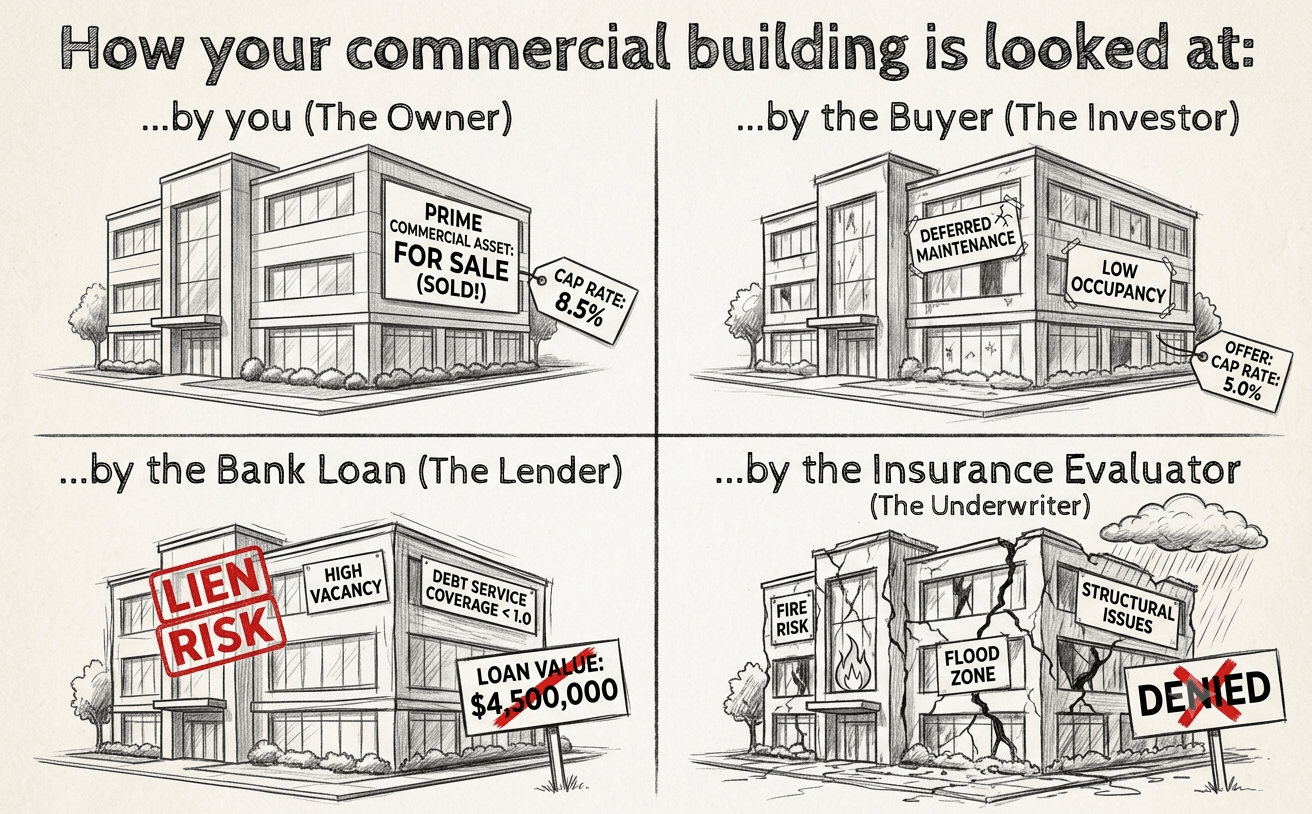
A single commercial asset can look completely different depending on who is looking at it. These subjective views create significant valuation gaps that can stall or entirely destroy a commercial deal.

Closing a commercial deal requires you to look at the property through the eyes of everyone involved. Once you understand their different priorities, you can successfully bring the parties together.

The Four Lenses of a Commercial Asset

1. You (The Owner)

To you, the property represents an exceptional asset with a strong yield. Owners naturally focus on the positive attributes, such as an attractive capitalisation rate, a well-maintained structure, and a reliable income stream. You see the long-term equity and the hard work you have invested in the property.

2. The Buyer (The Investor)

The moment a prospective buyer inspects the property, they put on a risk-adjusted lens. They do not see a seamless stream of income; instead, they often see a fixer-upper. Buyers actively hunt for deferred maintenance, aging plant and equipment, or low occupancy risks. They may adjust their expectations and counter with a significantly lower offer to offset these perceived risks.

3. The Bank Loan (The Lender)

Lenders are fundamentally risk-averse. They do not evaluate a property based on its potential upside; they look at the worst-case scenario. A bank evaluator reviews the asset to identify any series of risks that could undermine the debt service coverage ratio. If the debt service coverage falls too low, or if they note a history of high vacancy, they will heavily discount the loan valuation to protect their capital against potential lien risks.

4. The Insurance Evaluator (The Underwriter)

The underwriter views a commercial building as a collection of potential disasters waiting to happen. They are searching for reasons to increase premiums or issue a flat denial of coverage. They focus heavily on environmental hazards, fire risks, structural issues, and whether the property sits within a known flood zone.

Why Subjective Views Take Over

In Queensland, understanding these gaps is more critical than ever due to the strict legal framework governing property sales. Under the Property Law Act 2023 (Qld), sellers must navigate a mandatory seller disclosure regime. This requires providing a formal Form 2 Seller Disclosure Statement along with prescribed certificates to a buyer before a contract of sale is signed.

However, there is a catch. The statutory Queensland disclosure regime explicitly excludes details regarding the structural soundness of the building, pest histories, or flooding histories. Because the law does not mandate the disclosure of these structural and environmental aspects in the Form 2 statement, it leaves a massive grey area. Buyers, banks, and insurers are forced to conduct their own independent, highly subjective due diligence. Without a unifying point of truth, the transaction can easily fall apart under the weight of conflicting perceptions.

Aligning All Stakeholders with McGees Property

You cannot let subjective perceptions dictate the true worth of your property. To close the gap between perception and reality, you need an objective, defensible, and comprehensive analysis that withstands scrutiny by buyers, banks, and insurers alike.

An independent valuation by a professional registered with the Valuers Registration Board of Queensland ensures that your asset is appraised using standardised methodologies and precise, localised market data. This aligns all parties with a single, accurate market value based on expertise, rather than multiple perspectives.

Get a commercial valuation you can stand behind. Do not let conflicting perceptions compromise your hard-earned asset value. Contact the McGees Valuation team today for a precise, professional consultation tailored to the Queensland property market.

Send us an email at valuations@bne.mcgees.com.au

For a complete list of weekly commercial transactions in Queensland, visit McGees Wrap Up | McGees Property Brisbane

Disclaimer: The information provided in this blog is for general informational purposes only and does not constitute legal, financial, or professional advice. While we strive for accuracy, we make no guarantees regarding the completeness or timeliness of the content. Always seek independent advice before making any financial or real estate decisions. We are not liable for any loss or damages arising from your reliance on the information provided.

Liability Limited by a Scheme approved under Professional Standards Legislation

Latest News

McGees Wrap Up 23 October 2026

October 23, 2026

McGees Wrap Up 23 October 2026

Queensland Commercial Property Weekly Wrap-Up Week Ending 23 October 2026 South East Queensland commercial property is accelerating as the 2032 Olympic deadline forces developers and investors to lock in projects before resource bottlenecks intensify. Population growth continues to fuel exceptional…

October 23, 2026 McGees Wrap Up
McGees Wrap Up 16 October 2026

October 16, 2026

McGees Wrap Up 16 October 2026

Market Overview Queensland commercial property is drawing intense local and cross-border capital as investors race to secure assets ahead of long-term infrastructure delivery (Bleby, 2026; Lenaghan, 2026). The Brisbane central business district office sector has reached Australia's tightest vacancy rate…

October 16, 2026 McGees Wrap Up
McGees Wrap Up 9 October 2026

October 9, 2026

McGees Wrap Up 9 October 2026

Market Overview South East Queensland commercial property continues to experience fierce capital competition driven by severe supply constraints and infrastructure connectivity. While broader macroeconomic headwinds such as falling building approvals and rising retail operational costs challenge feasibility, developers and investors…

October 9, 2026 McGees Wrap Up

October 1, 2026

McGees Wrap Up 2 October 2026

Rising sovereign bond yields and tight consumer budgets are testing commercial property valuations across Queensland, but capital continues to find a home where tenant demand and infrastructure investment remain clear. Australian ten-year government bond yields have climbed past 5.3 per…

October 1, 2026 McGees Wrap Up
View all

Over 45 years of national property excellence.

Contact our experienced team today.

First Name(Required)
Last Name(Required)

Lease Renewal Process: A Complete Guide for Landlords and Tenants

June 4, 2026

A fixed term lease will eventually approach its expiry date. When this happens, both parties face a critical decision-making window.

Navigating a lease renewal requires a clear understanding of legal obligations. You must also understand market conditions and maintain proper communication.

An existing lease can transition into a new fixed term agreement. Alternatively, it can roll over into a periodic tenancy.

Understanding this process ensures the rental property continues to perform optimally for the owner. It also provides essential stability for the tenant.

Handling a lease renewal involves balancing specific rights. We must balance the landlord right to protect their asset with the tenant right to a safe home.

This comprehensive guide breaks down the lease renewal process. It outlines legal requirements and details what both parties should do to negotiate new terms successfully.

Understanding the Basics of the Tenancy Agreement

The word agreement can mean several different things. The exact meaning depends entirely on your specific property type.

It could refer to a standard residential lease or a Commercial Tenancy Agreement (CTA). It might mean a Retail Tenancy Agreement (RTA).

Sometimes it means a specialized lease agreement drafted by a solicitor. Each document has different legal rules.

A standard tenancy agreement is a legally binding written agreement. It dictates exactly how long a tenant can occupy a rental property.

When the initial fixed term lease agreement nears its end date, the contract does not simply vanish.

The managing agent or property manager typically initiates communication early. They will contact you 60 to 90 days before the lease expires.

If no new agreement is signed, the contract changes. If neither party serves a proper notice to vacate, it becomes a periodic agreement.

This arrangement is often called a periodic lease or a month-to-month agreement. A periodic tenancy offers high flexibility because it lacks a strict end date.

However, most leases are renewed as a new fixed term agreement. This pathway provides long-term predictability for both the landlord and the tenant.

Navigating Different Agreement Types

Both parties must have a good understanding of their contract type. You must know exactly what kind of document governs your tenancy.

The legal framework changes completely between commercial and residential properties. Here is a breakdown of how they differ.

Agreement Type

Best Suited For

Key Characteristics

Residential Tenancy Agreement

Homes, apartments, and residential rental property portfolios.

Strictly regulated by state consumer acts. It heavily protects basic living standards.

Commercial Tenancy Agreement (CTA)

Offices, warehouses, and industrial premises.

Offers high flexibility to negotiate new terms. It relies heavily on the written agreement.

Retail Tenancy Agreement (RTA)

Shops, shopping centres, and public-facing businesses.

Governed by specific retail shop leases acts. It requires strict disclosure statements from the owner.

Solicitor-Drafted Lease

Complex, high-value, or unique commercial properties.

Tailor-made by a lawyer. It includes highly specific landlord plans and special conditions.

Professional Tip: You must check the schedule and annexure if they are included in the lease. Do this before you sign new documents. The schedule contains vital variables like the exact end date, rent property rates, and option periods. The annexure contains extra clauses that modify your obligations.

The Landlord Right: Protecting the Asset and Revenue

Landlords have distinct legal avenues and rights when a fixed term agreement finishes.

A primary landlord right is the ability to review the terms of the tenancy. This includes assessing how much notice is required for changes.

They will also evaluate local market rates to propose a rent increase.

Proposing Rent Increases Accurately

A landlord can propose a rent increase when a fixed term agreement ends. However, strict legal notification requirements apply.

Under contemporary Australian regulations, rent increases require at least 12 months between adjustments.

This rule applies regardless of a new tenancy agreement. It also applies if there is a change in the property management team.

For a periodic lease, the landlord must provide an explicit notice period. They must give 60 days notice in writing before the new rent takes effect.

Seeking Vacant Possession

The owner might have other landlord plans for the property. These plans could include selling the asset or moving into the premises.

In these cases, they have the right to issue a written notice for vacant possession.

However, they must provide proper notice by law. They must give a minimum of two months written notice prior to the end of a fixed term.

A landlord cannot simply terminate a lease without reasonable grounds during a fixed term.

They can only do so if a significant breach of agreement has occurred. An example of a breach is the non payment of rent.

The Tenant Right: Security, Proof, and Fair Terms

Tenants hold essential protections under residential tenancy laws. These protections ensure they are not subjected to unfair practices when an existing lease expires.

Right to Information and Evidence

A vital tenant right is the ability to request written proof of the last rent increase date.

A tenant might be concerned that a proposed rent increase violates the 12-month rule.

They can request written proof from the managing agent. The agent must provide this evidence within 14 days.

Reviewing and Responding to Offers

A property manager may issue a new General Tenancy Agreement Form 18a. The tenant has the right to review the document line-by-line.

They should check it carefully against the original agreement. However, strict timelines apply to this process.

A tenant must return Form 18a within five days of issue to secure the new fixed term.

Tenants also have the right to request changes to maintenance responsibilities. They can seek to resolve outstanding repair issues as a condition of signing.

What Both Party Should Do: Proactive Steps for a Smooth Renewal

Both parties should adopt a collaborative, transparent approach to the renewal process. This prevents a costly dispute.

  • Review the Current Lease: Both parties should review the current lease before negotiations start. This tracks any special conditions or previous agreements that need to be carried forward.

  • Keep Everything in Writing: All requests, notices, and counter-offers should be kept in writing. This practice maintains a clear paper trail.

  • Evaluate Local Market Rates: Landlords and tenants should look at similar properties in the area. This helps negotiate a fair, realistic rent property rate.

  • Address Outstanding Repairs: It is highly advisable to document any outstanding repair issues before lease renewal. Requesting repairs can be made a formal condition of signing the new lease agreement.

  • Negotiate in Good Faith: Both parties can negotiate new lease terms. This includes the term lease length, pet clauses, or minor maintenance updates. Leases can extend for six months or a year.

The Value of Long-Term Fixed Term Tenancies

Establishing a long-term lease can provide incredible stability for tenants and landlords alike.

For tenants, a new fixed term lease ensures they will not be forced to vacate under short notice periods.

For landlords, keeping good tenants can save landlords money in turnover, cleaning, and marketing fees.

The tenant might decide to vacate at the end date of the original lease.

Alternatively, the landlord might seek possession when the lease ends. Either way, the proper notice period must be adhered to by law.

A tenant might refuse to vacate after receiving proper notice. If this happens, or if another major breach occurs, the owner can take action.

The owner can contact the relevant administrative tribunal. They can seek a termination order under certain circumstances.

Maximise Your Investment: Upscale to McGees Property Management

Managing lease renewals can quickly become overwhelming for private landlords. Tracking the last rent increase date and checking compliance line-by-line takes significant time.

Handling complex tenant relations requires deep expertise. Missing a critical notice period deadline can lead to unwanted periodic tenancies or costly vacancies.

That is why smart property owners partner with McGees Property Brisbane.

McGees Property is an industry-leading commercial and residential property management firm. We bring over 130 years of Queensland expertise to your asset.

Our team delivers a dedicated owner-mindset approach to asset management.

Crucial Timelines: The Earliest and Latest Dates for Exercising Options

In commercial and retail leasing, few clauses carry more financial weight than the option to renew. Both parties must understand that an option is not an automatic extension; it is a strict legal right that must be exercised within a precise window, typically found in the lease schedule. This window is defined by an earliest date (often six to nine months before the lease expires) and a latest date (usually three months before expiry).

For the tenant, missing the latest date can be catastrophic. If the deadline passes, the option lapses entirely, and the tenant loses their legal right to stay, leaving them at the mercy of market conditions or forcing them to relocate their business at great expense. For the landlord, this window provides vital predictability for their landlord plans. If the earliest date passes without a word, the managing agent can begin assessing local market rates and preparing to advertise for a new tenant. Conversely, if the tenant exercises the option accurately within the timeframe, the landlord is legally locked into granting the new lease agreement under the predetermined terms, ensuring uninterrupted asset revenue. Check the schedule and annexure of your contract carefully; a single day’s delay can completely alter the bargaining power between both parties.

Why Choose McGees Property?

When you trust your investment to our professional property management team, we handle the entire process seamlessly:

  • End-to-End Lease Administration: We proactively track key dates and manage the entire renewal process. We handle complex lease administration issues so you never miss a deadline.

  • Legal Compliance: Our property managers ensure strict adherence to the law. We protect you from compliance breaches regarding rent increase intervals and notice periods.

  • Tenant Relationship Management: We build strong, productive tenant relationships. This supports long-term tenant retention and minimizes turnover costs.

  • Preventative Maintenance and Facilities Management: We coordinate routine repairs through our expert in-house facilities teams. We ensure your building meets the highest safety standards, preserving your maximum capital appreciation.

Do not let the complexities of residential tenancy laws compromise your rental income stream.

Ensure your property is managed professionally, responsibly, and with a focus on long-term capital growth.

Contact the experienced team at McGees Property Brisbane today. Discover how we can remove the pressure of day-to-day management and maximise your investment returns.

Email: asset.admin@bne.mcgees.com.au

Phone 07 3231 9777

For a complete list of weekly commercial transactions in Queensland, visit McGees Wrap Up | McGees Property Brisbane

Disclaimer: The information provided in this blog is for general informational purposes only and does not constitute legal, financial, or professional advice. While we strive for accuracy, we make no guarantees regarding the completeness or timeliness of the content. Always seek independent advice before making any financial or real estate decisions. We are not liable for any loss or damages arising from your reliance on the information provided.

Liability Limited by a Scheme approved under Professional Standards Legislation

Latest News

McGees Wrap Up 23 October 2026

October 23, 2026

McGees Wrap Up 23 October 2026

Queensland Commercial Property Weekly Wrap-Up Week Ending 23 October 2026 South East Queensland commercial property is accelerating as the 2032 Olympic deadline forces developers and investors to lock in projects before resource bottlenecks intensify. Population growth continues to fuel exceptional…

October 23, 2026 McGees Wrap Up
McGees Wrap Up 16 October 2026

October 16, 2026

McGees Wrap Up 16 October 2026

Market Overview Queensland commercial property is drawing intense local and cross-border capital as investors race to secure assets ahead of long-term infrastructure delivery (Bleby, 2026; Lenaghan, 2026). The Brisbane central business district office sector has reached Australia's tightest vacancy rate…

October 16, 2026 McGees Wrap Up
McGees Wrap Up 9 October 2026

October 9, 2026

McGees Wrap Up 9 October 2026

Market Overview South East Queensland commercial property continues to experience fierce capital competition driven by severe supply constraints and infrastructure connectivity. While broader macroeconomic headwinds such as falling building approvals and rising retail operational costs challenge feasibility, developers and investors…

October 9, 2026 McGees Wrap Up

October 1, 2026

McGees Wrap Up 2 October 2026

Rising sovereign bond yields and tight consumer budgets are testing commercial property valuations across Queensland, but capital continues to find a home where tenant demand and infrastructure investment remain clear. Australian ten-year government bond yields have climbed past 5.3 per…

October 1, 2026 McGees Wrap Up
View all

Over 45 years of national property excellence.

Contact our experienced team today.

First Name(Required)
Last Name(Required)

Understanding Commercial Deposits: Upfront Rent (Leasing deposit) vs. Bond (Security Deposit)

May 30, 2026

Before examining how a deposit is managed throughout a tenancy, it is important to clarify that a commercial "deposit" generally refers to two entirely different financial requirements:

  • The Leasing Deposit (Rent in Advance): This is the upfront payment required to secure and activate the lease, typically covering your first 1, 2, or 3 months of rent. This money is not held long-term; instead, it is immediately applied directly to your initial rent invoices once the lease term begins.
  • The Security Deposit (The Bond): This is a separate pool of funds held by the landlord or agent for the entire duration of the lease. Often referred to simply as the bond, it acts as a financial guarantee against tenant defaults, property damage, or a failure to complete make-good obligations at handover. This money remains locked away and is only returned after the lease expires and all contractual obligations are fulfilled.

How Much Deposit for Commercial Property: What Happens During and After the Lease?

During the lease, the landlord may call on the deposit for unpaid rent, outgoings, damage, or make-good. It is not normally used for ordinary rent unless agreed in writing.

Many leases require you to top up any amount drawn within 7–14 days. At expiry, the property is inspected, make-good is assessed, and the bond or guarantee is released once obligations are met.

The regulatory environment varies heavily by state:

  • Victoria: The VSBC notes that landlords must hold the deposit in an interest-bearing account, account to the tenant for the interest earned, and return it within set timeframes once obligations are satisfied.
  • Queensland: The Queensland Small Business Commissioner clarifies that there is no legislative requirement for a commercial or retail shop lease security to be held in a particular manner, nor is there a statutory timeframe for its return. The handling, interest, and release of the security are dictated entirely by the terms of your lease contract.

Working With McGees: Balancing Protection for Landlords and Practicality for Tenants

McGees helps benchmark deposits against standard commercial properties, retail, office and industrial deals in the same property market.

For tenants, McGees explains the minimum deposit, lower deposit options, bigger deposits, commercial property deposit requirements and careful planning needed before paying money. For landlords, McGees helps secure appropriate protection without making the deal unworkable. Early advice is especially useful before paying a non-refundable holding deposit or signing binding documents.

How Much Deposit for a Commercial Lease? (Tenant Guide for Australia)

Key Takeaways for Securing a Commercial Property Loan

  • Most Australian tenants should expect a lease deposit or bank guarantee of 3–6 months’ gross rent.
  • A leasing deposit is different from a commercial property purchase deposit or commercial property loan deposit.
  • Higher-risk uses, long leases, incentives and specialised fit-outs can push the required deposit higher.
  • McGees helps tenants and landlords agree fair commercial property deposit requirements before documents are signed.

Introduction: Tenant vs Buyer – What Do We Mean by “Deposit”?

If you are asking how much deposit for commercial property as a tenant, you are usually asking about lease security: a holding deposit, security bond, bank guarantee, or cash deposit to protect the landlord if rent, damage or make-good obligations are not met.

That is not the same as buying commercial property. Commercial property loans typically require larger deposits than residential loans and often come with higher interest rates, often ranging from 20% to 40% of the property’s value, while residential loans usually require a deposit of around 20%. The typical deposit for a commercial property loan in Australia ranges from 25% to 35% of the property’s value, but this can vary based on property type, location, and the borrower’s financial situation. Typically, lenders require a deposit between 20% and 30% of the property’s value for commercial property loans. Some lenders require up to 50% for high-value or specialized properties.

Commercial property loans usually have lower loan to value ratio limits than residential loans. Commercial loans typically cap at 65% to 80% LVR, while residential loans can go up to 90% or even 95%. Commercial lenders in Australia also often cap at 65-75%, meaning lenders require larger deposits because they view these properties as riskier than residential. Lenders view commercial properties as riskier investments compared to residential properties, leading to stricter criteria, higher deposit requirements and more thorough risk assessments. Transaction costs for commercial property typically add an extra 5% to 7% to the property’s purchase price, including Stamp Duty, GST, valuation fees and legal fees. This article focuses on the lease, not the property’s purchase price.

How Much Deposit Required Should a Commercial Tenant Expect to Pay?

For a standard lease in Australian commercial real estate, the normal deposit amount is 3–6 months’ gross rent. Gross rent usually means base rent, outgoings and GST.

Here are practical benchmarks:

Property Type Typical Tenant Deposit
Small suburban retail spaces 3–4 months’ gross rent
CBD office suite 3–6 months’ gross rent
Industrial warehouse 3 months for lower risk tenants; more for start-ups, reflecting tight Brisbane industrial property market conditions
Café, restaurant or other specialised properties 4–6 months, sometimes higher, particularly in prime Brisbane retail locations available for lease
A start-up café leasing 80 sqm in 2026 may be asked for 4–6 months. A separate holding deposit of 1–2 weeks’ rent may also be paid to secure the commercial property while lease terms are finalised. N/A

Types of Deposits in Commercial Leasing (From a Tenant’s Perspective)

Commercial property deposits can take different forms:

  • Holding deposits: paid before the lease is signed and often credited to rent or security if the deal proceeds.
  • Cash security bonds: money held during the lease, sometimes in a trust account or savings account.
  • Bank guarantees: a bank promise to pay the landlord up to the agreed amount if the tenant defaults.

A bank guarantee may protect working capital, but it can affect borrowing capacity, commercial loan deposits and future commercial loans if the same bank treats it as contingent debt. For a business owner with a savings goal, this can matter as much as the rent itself.

Key Factors That Influence Commercial Property Deposit Requirements for Tenants

The deposit required will vary depending on risk. A tenant with stable income, good credit history, strong financial position and proven rental income is a lower risk. Start-ups, hospitality operators and tenants with limited trading history usually pay more.

Lease length also matters. A 5 + 5 year lease, large incentive, or landlord-funded commercial property building works can justify a larger deposit. Lenders assess a borrower’s business profile, including trading history and cash flow, to determine deposit requirements for loans; landlords often think similarly for leases.

Property type and location count. Metropolitan assets often have lower purchase deposit requirements due to high liquidity, while regional properties face higher vacancy periods and can require 40% or more in purchase finance. Higher risk premises like hotels, farms, or remote petrol stations often require a deposit of 40% to 50% when financed.

How Much Is “Too Much”? Benchmarking Your Deposit Against the Market

A request above 6 months’ rent is not automatically wrong, but buyers should test it against comparable market terms. For example, a 50 sqm Adelaide strip shop at $50,000 p.a. gross rent might need $12,500–$16,700. A Brisbane 1,000 sqm warehouse at $150,000 p.a. might need $37,500 for an established logistics tenant.

Market conditions significantly influence deposit requirements; in competitive markets, sellers may demand larger non-refundable deposits. The location and market conditions can significantly impact the deposit requirements for commercial properties, with prime locations often requiring higher deposits due to increased competition and perceived lower risk.

Ask McGees whether the deposit terms match comparable deals in the gold coast, Brisbane, Adelaide, Perth, Sydney or Melbourne market, or work with a top commercial real estate agency in Brisbane to sense-check local conditions.

Negotiation Strategies for Your Commercial Lease Deposit as a Tenant

Before signing heads of agreement, negotiate. You might offer:

  • a slightly higher rent for a lower deposit;
  • a longer initial term for a 3-month bond instead of 6;
  • stronger make-good clauses rather than bigger deposits;
  • financial statements showing you can pay.

Negotiating with the seller or their agent may allow you to secure a lower deposit if you can offer favorable terms, such as a quick settlement. In leasing, similar negotiation strategies apply: stronger terms can reduce perceived risk, and arranging technical due diligence on commercial property can further support your position.

Reducing the Cash You Need Upfront (Without Over-Exposing Yourself)

A bank guarantee can reduce cash outlay, but read the fine print. You can offer other assets, such as residential property, as security on your commercial loan to potentially lower your deposit requirement, and experienced commercial property advisers in Brisbane can help you balance these trade-offs.

Cross-collateralisation allows you to use equity from other properties as part of your deposit, which can reduce the cash deposit needed for a commercial property purchase. But cross collateralisation can also put a residential property, home loan, investment properties or other property at risk if the business fails, particularly if broader Brisbane commercial property market trends shift unexpectedly.

Major banks and non bank lenders may offer different lenders’ products, interest rate options and loan structures. Most lenders will consider income, funds, debt, security, intended use, borrowers, business history and whether additional security is available. A self managed super fund may face separate rules. McGees does not provide financial advice, but can flag when you need for a commercial adviser, solicitor or lender to review the risk.

What Happens to Your Deposit During and After the Lease?

During the lease, the landlord may call on the deposit for unpaid rent, outgoings, damage or make-good. It is not normally used for ordinary rent unless agreed in writing.

Many leases require you to top up any amount drawn within 7–14 days. At expiry, the property is inspected, make-good is assessed and the bond or guarantee is released once obligations are met. In Victoria, the VSBC notes that some deposits must be returned with interest within set timeframes if obligations are satisfied: VSBC security deposits. National firms like McGees Property Brisbane can explain how these rules interact with commercial leasing practice across different states.

Working With McGees: Balancing Protection for Landlords and Practicality for Tenants

McGees helps benchmark deposits against standard commercial properties, retail, office and industrial deals in the same property market.

For tenants, McGees explains the minimum deposit, lower deposit options, bigger deposits, commercial property deposit requirements and careful planning needed before paying money. For landlords, McGees helps secure appropriate protection without making the deal unworkable. Early advice is especially useful before paying a non-refundable holding deposit or signing binding documents.

FAQ

Is a commercial lease deposit refundable if my business fails early?

Not automatically. The landlord can usually apply the deposit to unpaid rent, make-good, outgoings, reletting costs and any agreed costs. Any surplus may be returned. Review assignment and termination clauses before signing.

Can my landlord increase the security deposit during the lease term?

Yes. In commercial leasing, the security deposit (or bond) is typically calculated as a set number of months’ rent (for example, 3 to 6 months’ gross rent).

When a scheduled rent review occurs and your monthly rent increases, the original bond amount no longer covers that 3-to-6-month benchmark. Therefore, most commercial lease agreements include a clause requiring a bond top-up. This means you will need to pay the difference to ensure the landlord remains fully secured at the new, higher rental rate.

To protect your cash flow, you should try to negotiate a cap on the security deposit or request a fixed dollar amount rather than a rolling percentage before signing the lease.

Can I use a loan or overdraft to fund my commercial lease deposit?

Important Disclaimer: McGees does not provide financial, credit, or legal advice. The information below is for general educational purposes only. Before taking on business debt, drawing on an overdraft, or committing to any financial facility, you must consult with a qualified financial advisor, accountant, or commercial finance broker.

Yes, some tenants choose to use a commercial loan, business overdraft, or specialized business facility to cover their upfront lease obligations. However, you must look closely at how the facility is structured. Many lenders will require these facilities to be secured against personal assets (such as your family home or a personal mortgage). This links your personal wealth directly to the commercial lease, exposing your private assets to significant risk if the business struggles.

Before making any financial commitments, you should seek independent advice and review authoritative guidance on commercial liabilities:

  • Government Guidance: Review the Australian Government’s objective checklist on funding and managing liabilities through the Business.gov.au Guide to Commercial Leases.
  • Financial Literacy: Explore how business loans and personal guarantees impact your personal risk on the Australian Securities and Investments Commission’s Moneysmart website.
  • Legal Oversight: Consult a qualified property lawyer or solicitor to review your lease’s bank guarantee and security clauses before signing.

Is my commercial lease deposit held in a trust account like a residential bond?

In Queensland, the handling of a residential rental bond is strictly governed by the Residential Tenancies and Rooming Accommodation Act 2008 and overseen by the Residential Tenancies Authority (RTA).

1. Statutory Obligation to Lodge

Unlike commercial tenancies, it is a serious legal offence for a residential landlord, property manager, or head-tenant to hold onto a cash bond. Once a tenant pays the bond, the person who received the funds must issue a receipt immediately and lodge the money with the RTA within 10 days. Failure to do so can result in substantial statutory fines.

2. Maximum Cap Limits

The RTA strictly regulates how much bond a landlord can request:

  • For general residential tenancies, the maximum bond allowed cannot exceed the equivalent of 4 weeks’ rent.
  • Landlords are legally forbidden from bypassing this cap by charging separate “pet bonds” or “linen deposits”—all security money combined must fit under the 4-week limit.

3. Protection and the Refund Process

The RTA acts as an independent, neutral government custodian. The money is held securely in a government trust account throughout the tenancy.

When the lease ends, the release of the bond is handled through a structured legal process. If both parties agree on the condition of the property, a joint claim is submitted, and the RTA refunds the money. If there is a dispute (e.g., over cleaning or damage), the RTA freezes the funds and initiates a formal dispute resolution process, which can progress to the Queensland Civil and Administrative Tribunal (QCAT) if unresolved.

Queensland Commercial Lease Security: A Contract-Driven Market

For commercial real estate in Queensland, the regulatory safety nets of the RTA do not apply. The Queensland Small Business Commissioner (QSBC) explicitly confirms that there is no legislative body that holds or registers commercial lease deposits, and the amount is completely uncapped. Instead, everything relies entirely on the custom clauses written into your specific lease contract.

Commercial security deposits in QLD generally take one of two primary forms, and the lease determines exactly who holds that financial power.

1. Types of Commercial Security
  • Bank Guarantee: This is an unconditional, ongoing promise issued by the tenant’s bank to the landlord. No physical cash changes hands upfront between the tenant and landlord. Instead, the bank guarantees that if the tenant defaults (e.g., fails to pay rent or skips out on “make-good” obligations), the landlord can present the certificate to the bank and immediately withdraw the specified funds.
  • Cash Bond: This is physical money transferred upfront by the tenant. Because there is no statutory regulation capping the amount, landlords regularly request anywhere from 3 to 6 months’ gross rent as a cash bond.
2. Who Holds a Commercial Cash Bond?

Because there is no government authority like the RTA for commercial properties, a cash bond can legally be held in several different ways, depending entirely on what is negotiated in the lease agreement:

  • The Landlord Directly: The landlord may deposit the cash bond straight into their own private bank account or business entity account.
  • The Managing Agent: The commercial property management agency may hold the funds securely within their regulated real estate agency trust account.
  • The Solicitor: The landlord’s lawyer or solicitor may hold the cash bond within their legal firm’s formal trust account.

Risk Note: Because the money is held by the landlord or their representative rather than an independent government body, commercial tenants face a higher risk if a landlord goes bankrupt or if the building is sold. The lease must explicitly state that the cash bond must be transferred to any new owner or returned safely at expiry. Furthermore, under the QLD Retail Shop Leases Act 1994, commercial landlords are strictly prohibited from making a security deposit non-refundable, as it would be classified as illegal “key money”.

Summary Table: QLD Residential vs. Commercial Security Deposits

Feature QLD Residential Bonds QLD Commercial / Retail Bonds
Governing Authority Residential Tenancies Authority (RTA) None. Governed strictly by the lease contract (with oversight tips by the QSBC).
Who Holds the Money? Must be lodged with the RTA (independent government body). Holding it privately is a legal offence. The Landlord, their Managing Agent, or their Solicitor (held in private/corporate bank or trust accounts).
Acceptable Forms Cash/Direct Electronic Transfer only. Bank Guarantee or Cash Bond (and frequently backed by personal director guarantees).
Maximum Amount Cap Strictly capped at 4 weeks’ rent for standard tenancies. Uncapped by law. Typically ranges from 3 to 6 months’ gross rent based on risk.
Lodgement Timeframe Must be sent to the RTA within 10 days of receipt. No statutory timeframe; dictated entirely by the lease execution terms.

For a complete list of weekly commercial transactions in Queensland, visit McGees Wrap Up | McGees Property Brisbane

Disclaimer: The information provided in this blog is for general informational purposes only and does not constitute legal, financial, or professional advice. While we strive for accuracy, we make no guarantees regarding the completeness or timeliness of the content. Always seek independent advice before making any financial or real estate decisions. We are not liable for any loss or damages arising from your reliance on the information provided.

Liability Limited by a Scheme approved under Professional Standards Legislation

Latest News

McGees Wrap Up 23 October 2026

October 23, 2026

McGees Wrap Up 23 October 2026

Queensland Commercial Property Weekly Wrap-Up Week Ending 23 October 2026 South East Queensland commercial property is accelerating as the 2032 Olympic deadline forces developers and investors to lock in projects before resource bottlenecks intensify. Population growth continues to fuel exceptional…

October 23, 2026 McGees Wrap Up
McGees Wrap Up 16 October 2026

October 16, 2026

McGees Wrap Up 16 October 2026

Market Overview Queensland commercial property is drawing intense local and cross-border capital as investors race to secure assets ahead of long-term infrastructure delivery (Bleby, 2026; Lenaghan, 2026). The Brisbane central business district office sector has reached Australia's tightest vacancy rate…

October 16, 2026 McGees Wrap Up
McGees Wrap Up 9 October 2026

October 9, 2026

McGees Wrap Up 9 October 2026

Market Overview South East Queensland commercial property continues to experience fierce capital competition driven by severe supply constraints and infrastructure connectivity. While broader macroeconomic headwinds such as falling building approvals and rising retail operational costs challenge feasibility, developers and investors…

October 9, 2026 McGees Wrap Up

October 1, 2026

McGees Wrap Up 2 October 2026

Rising sovereign bond yields and tight consumer budgets are testing commercial property valuations across Queensland, but capital continues to find a home where tenant demand and infrastructure investment remain clear. Australian ten-year government bond yields have climbed past 5.3 per…

October 1, 2026 McGees Wrap Up
View all

Over 45 years of national property excellence.

Contact our experienced team today.

First Name(Required)
Last Name(Required)